Watch the film
| Size in ft: | Width: 3'5" x Length: 4'8" |
| Size in Inch: | Width: 41" x Length: 56" |
| Size in meters: | Length: 1.42 x Width: 1.04 m |
| Colors: | Indigo Blue, Ivory, Red, Rust, Camel, Olive |
| Shape: | Rectangular |
| Woven: | 100% Hand-knotted | Handmade |
| Foundation: | Cotton |
| Pile: | |
| Age: | Antique | Circa 1940s |
| Design: | Antique Boteh Paisley | All Over Repeat | Ivory Rosette Border |
| Origin: | |
| Condition: | Good | Antique with even age-related pile and end wear |
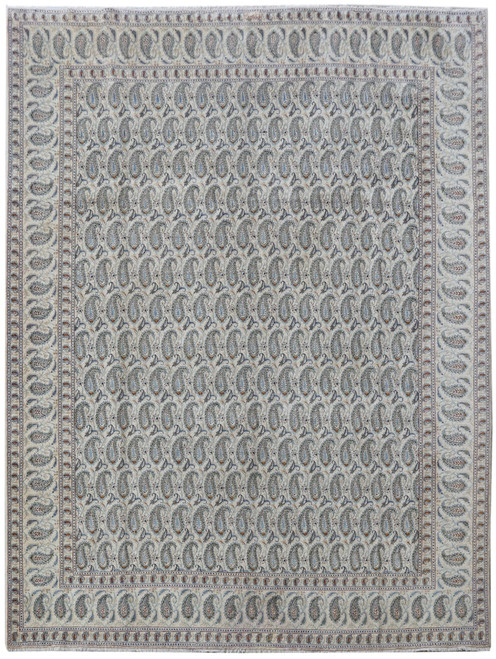
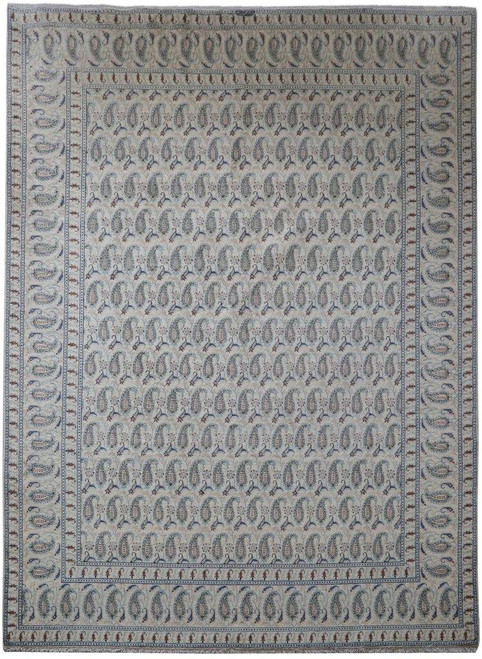
3'5" x 4'8" Antique Persian Tribal Rug | All Over Boteh Paisley | Indigo Blue Field, circa 1940s
Small antique weavings like this one are how most collections start. At 3'5" x 4'8" this is a true scatter piece, hand-knotted in hand-spun wool on a cotton foundation, with an indigo blue field packed corner to corner with boteh. Nothing about it is machine perfect: the rows lean, the colors shift where a new batch of dyed wool came onto the loom, and the ivory border wanders a stitch or two at the corners, which is exactly what a hand-drawn tribal piece from the workshopless villages of Persia should do. The pile has settled low with age, so the drawing reads sharply and the rug lies flat without buckling, an advantage for anyone shopping antique Persian tribal rugs or browsing our small Persian rugs for an entry, a bedside or a reading corner. Like every piece we sell, it ships with a certificate of authenticity documenting origin, materials and hand-knotted construction.
Please Note About the Photographs:
This is a genuine antique and it is photographed honestly. The pile sits low in places and the ends and fringes show handling from decades of use, which is normal character for a piece of this age and is reflected in the price. The bright gold patch visible along the lower border in a few frames is a reflection from the studio lighting, not a stain or a repair. Every rug is professionally cleaned, steamed and pressed before it leaves us.
Design and Motifs
The whole field is given over to the boteh, the almond shaped paisley that is one of the oldest motifs in Persian weaving, set in staggered diagonal rows of 5 across so that the eye travels along the lattice rather than to any center point. Each boteh is outlined in saw-tooth steps and filled differently: some carry checkerboard interiors of red and ivory, some a row of small crosses, some are drawn in solid camel or olive with a hooked tip that curls to the left. Around the edges the weaver tucked in her own shorthand, small birds, comb figures, tiny zigzag and box shapes and a pair of geometric animal forms near the lower field, the kind of personal additions you only get in a village piece rather than a cartoon-drawn workshop design. The main border is ivory and reads like a string of beads, each panel holding an octagonal rosette of 6 or 8 petals in alternating rose, sky blue and brown. Flanking it are narrow guard stripes of 8 pointed star flowers on dark brown and rust grounds, with a fine reciprocal line closing the whole composition. It is a classic all over design, which is why the rug works in any orientation you set it down in.
Color: Indigo, Ivory and Rust
The ground is a deep indigo that photographs slightly differently in every frame, reading nearly navy in the overhead shot and shifting toward a smoky teal blue in the close details. That movement is abrash, the natural variation you get when wool is dyed in small batches and the weaver works through them one after another, and it is one of the clearest signs of an honestly dyed antique. Against that blue the boteh come forward in brick red and softened terracotta rust, warm camel, a dusty olive green and plenty of undyed ivory wool, all of them outlined in dark brown that has the slightly corroded, low-lying texture typical of iron-mordanted black in old Persian weaving. Small hits of pale sky blue appear inside a handful of boteh and in the border rosettes, lifting the palette so it never goes heavy. The ivory main border is a creamy, buttery white rather than a bleached one, and it throws the field into relief. Taken together it is a warm, lived-in blue and rust palette that sits easily on wood floors, and it belongs with our other navy blue Persian rugs.
Origin and Weaving Quality
This is a Persian tribal weaving, made on a village loom rather than in a city atelier, and its virtues are the village virtues: tough, elastic hand-spun wool, natural dyes, a design carried in memory instead of copied from paper, and a knot count that is moderate by fine city standards but more than enough to draw a crisp boteh. The back, visible in two of the photographs, shows a tight, even grid with the knots clearly legible and the design reading almost as sharply from behind as from the front, which is the practical test of a well woven piece. Wool of this character came from flocks grazed on high pasture and it wears down rather than wearing out, which is why a piece from around the 1940s still has usable pile and a supple handle 80 years on. If you want to understand how weavers, dealers and collectors read age from wool, dyes, wear pattern and the back of a rug, our guide on how to date an Oriental rug walks through the same evidence we used on this one.
3'5" x 4'8" Antique Persian Tribal Rug | All Over Boteh Paisley | Indigo Blue Field, circa 1940s
Ask about this rug
This piece is the only one of it, so the things worth knowing about it are particular to it. If you want to talk through the size, the colour in your own light, or the weave, speak to someone here first.