Afghan Rugs
Afghan weaving is the most physical in this catalogue. The wool is coarse and strong, the foundation is often wool rather than cotton, and the palette runs dark red and deep blue. These are rugs made to be sat on, walked on and carried, and they behave accordingly: heavy, slightly uneven and extremely difficult to wear out.
The gul and the field
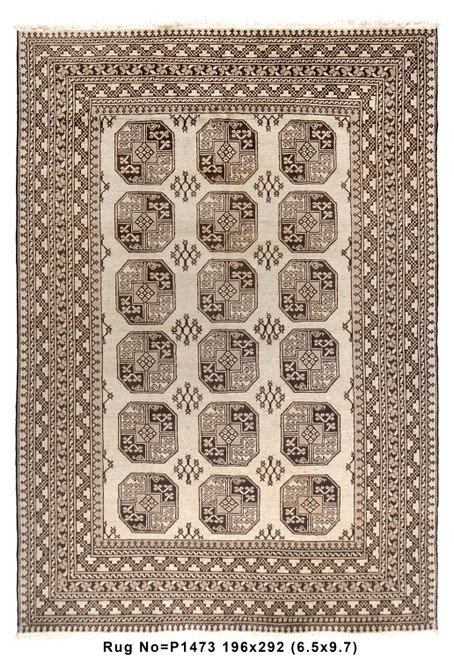
The dominant design is Turkmen: rows of the octagonal gul repeating across a madder red ground, with a narrow border and very little else. The same device underlies the Pakistani Bokhara, and the Afghan version is almost always coarser, darker and woven with a longer pile. Different tribal groups use recognisably different guls, which is how the trade sorts them.
Wool on wool
A cotton foundation holds a rug square. A wool one does not, quite, and that is the Afghan signature: edges with a gentle wave, a rug that does not lie perfectly flat the day it is unrolled and settles over a few weeks. It also makes the rug more flexible and noticeably warmer underfoot than an equivalent piece on cotton. The materials page explains what the foundation does in general.
The return of colour
Through the later twentieth century much Afghan production was dyed with harsh synthetics and then chemically washed to tame them, which left the wool dry. The vegetable dye revival reversed that, and the same looms now produce the soft, low-contrast Chobi palette across the border in Pakistan. Both kinds of Afghan rug are still woven, and the difference is obvious in the hand: good madder red is warm and varies across the field, a synthetic red is flat and identical everywhere.
Flat weaves
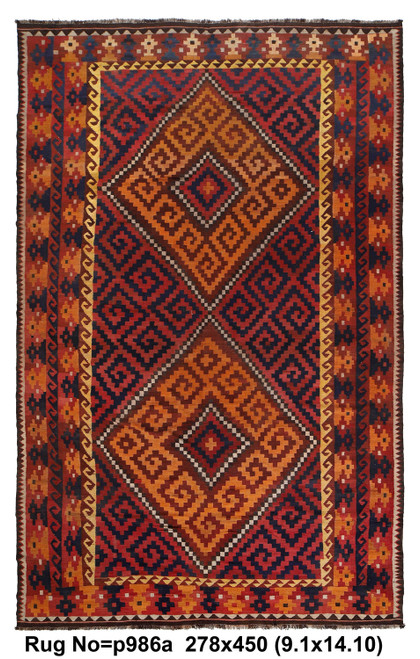
Afghanistan is also a major source of kilims and other flat weaves, where the pattern is the structure and the rug has no pile at all. They are thin, reversible and light, and they sit under a door that a thick Afghan pile rug would jam.
Where it belongs
Anywhere hard on a rug. A hall, a boot room, a family sitting room, a student flat. The dark ground hides everything and the construction takes punishment. It is not the rug for a formal drawing room, and for that the curved workshop fields of Iran or India are the better answer. If you like the geometry but want it lighter and more open, look at the Kazak and the wider tribal family.