Kashmar Rugs
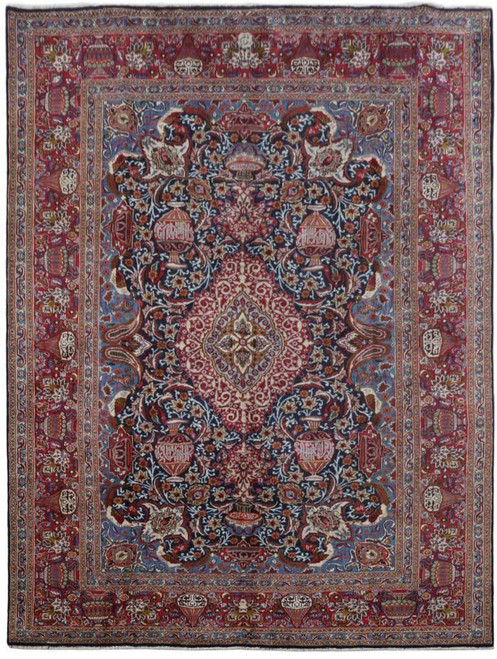
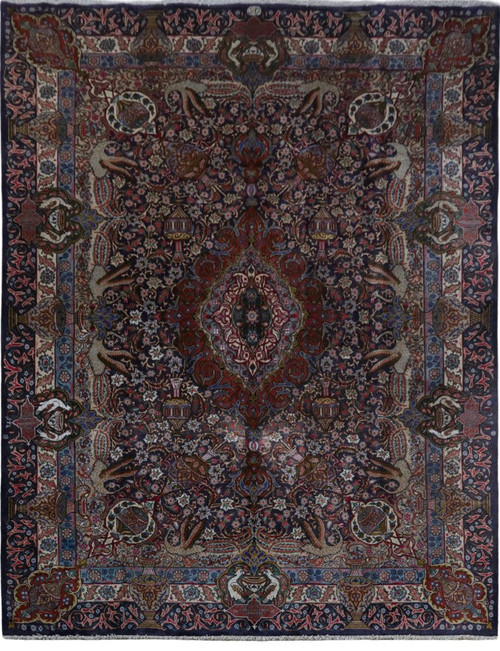
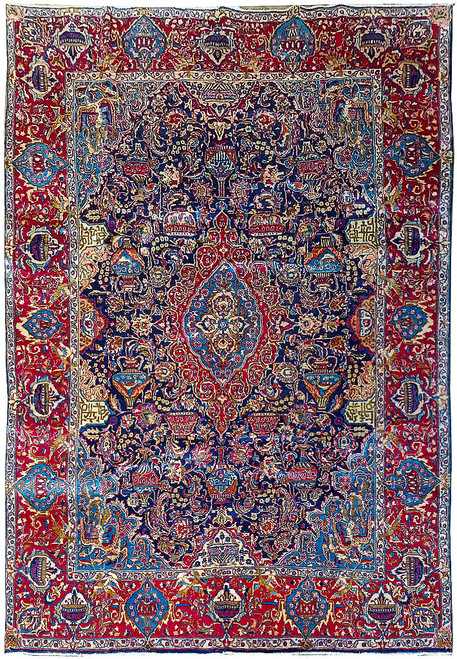
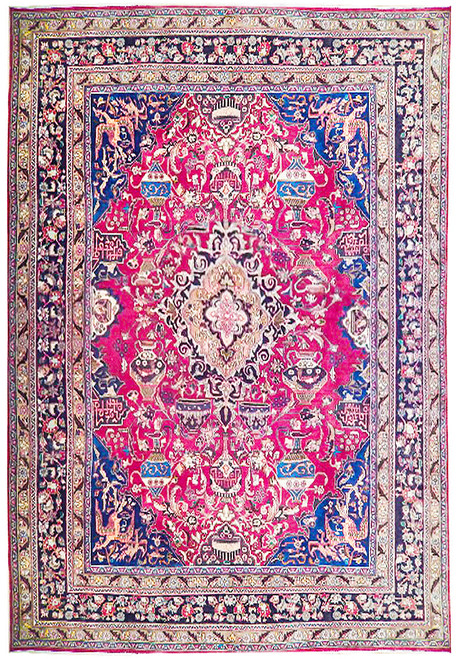
Kashmar is a town in Khorasan, in the north east of Iran, and it is known for two things. The first is size: the looms are set up for large and oversize carpets. The second is the Zirhaki design, where instead of a medallion the field carries vases, ewers, bowls, columns and cypress trees on an ivory ground, as though a relief had been laid out flat.
A recent name with a specific job
Kashmar is not one of the old classical centres. Its weaving industry is a twentieth-century development in a region that already had a long carpet history through Mashhad and Birjand, and it grew by doing something the established names did less of. Rather than competing on fineness with Tabriz or on prestige with Kashan, Kashmar built its production around large formats in a pale palette, which is a narrower proposition and a genuinely useful one. Nearby Moud took the opposite route and specialised in fineness at smaller scale.
The Zirhaki design
The design the town is known for is spelled several ways in the trade, Zirhaki, Zir Khaki or Zir-e Khaki, from the Persian for beneath the soil. Dealers usually translate it as the archaeological design. There is no medallion and no symmetrical corner structure. Instead the field is filled with objects: footed vases, ewers, shallow bowls, fluted columns, cypress trees, winged figures, animals in profile and fragments of architectural ornament, arranged in loose registers on an open ivory ground. The visual reference is the Achaemenid stone carving of Persepolis and the objects excavated across the region, and the effect is of a field of artefacts rather than a pattern. Whether any given motif is copied from a specific relief is not something a shop can tell you, and it is better described as a design in that idiom than as a reproduction of anything.
Why the pale ground matters at size
This is the practical argument for a Kashmar. A large carpet with a saturated red or navy field changes a room's light: it absorbs and it darkens, and in a space that is already short of daylight it can make the floor the heaviest thing in the house. A Kashmar's ivory or cream ground does the opposite. It covers the same square metres and keeps the room bright, which is why these rugs go into big open rooms, halls and long living spaces where a conventional traditional carpet would be too much. The secondary colours are usually soft: powder and slate blues, sage and olive, terracotta, camel and a little gold. Expect a Kashmar to read as an ivory and beige rug with sage or blue incidents rather than as a colour statement.
Construction, and what to expect underfoot
Kashmar is wool pile on a cotton foundation, knotted at a moderate density with a medium pile. It is not a fine rug and it is not trying to be: the drawing is stylised enough that very high knot counts would add little. What that construction does give is weight, stability and a surface that takes traffic sensibly, and the cotton foundation means a large one lies flat instead of rippling. The wool is decent Khorasan wool with a slight sheen. The honest caveat is the same one that applies to any pale rug: an ivory field in a house with dogs, children or a direct route from the garden will show its history sooner than a dark one. It is a rug for a room, not for a thoroughfare, and in a hallway a dark Hamadan or Heriz is the sensible substitute.
Other designs from the same looms
Not every Kashmar is a Zirhaki. The town also weaves conventional medallion and corner carpets in the Khorasan manner, all-over floral fields, and pictorial panels. These are competent, pleasant and considerably less distinctive, and they compete directly with better-known names, so the Zirhaki pieces are where the interest is. For compartment fields with a similar sense of many separate scenes on one carpet, the Bakhtiari garden designs are the closest relative in a completely different register.
Sizes and shapes
This is the point of the name. Kashmar is one of the more dependable sources of large and 12x18 hand-knotted carpets, with medium pieces and runners also woven. Most are rectangular in fairly standard proportions, which is what you want when a carpet has to fit a room rather than a corner. Within Persian weaving generally, and among transitional choices in particular, a Zirhaki Kashmar is an unusual thing: a figurative Persian carpet that is light in colour and available in the size a big room actually needs.