Rust & Orange Rugs
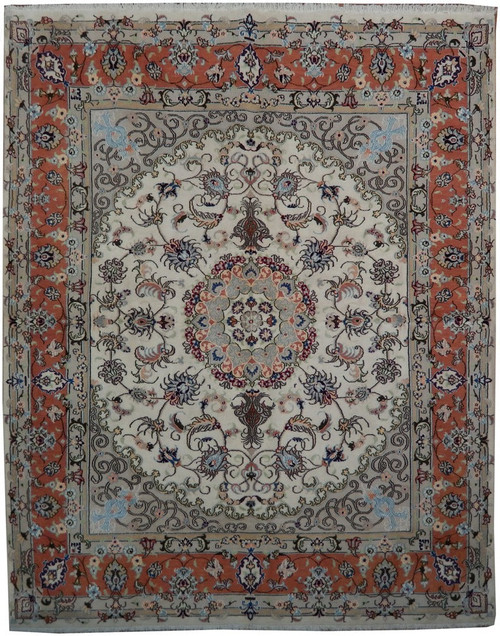
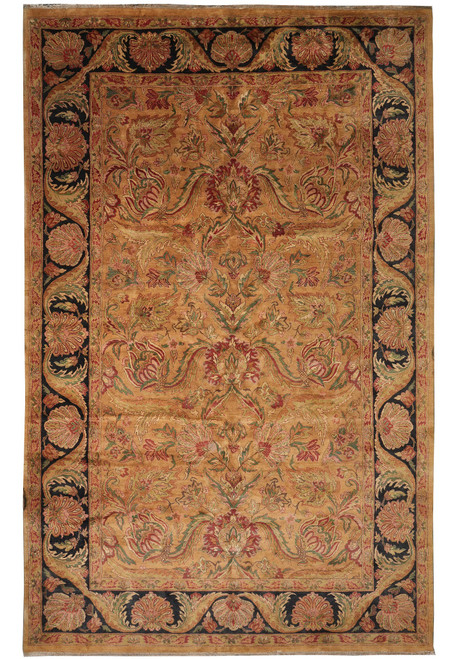
Orange is rarely a dye in its own right. In older rugs it is madder pushed one way by the mordant, or madder laid over a yellow, or simply camel-coloured fleece warmed by a red border beside it. The result is the family of rusts and terracottas that runs through north-west Persian weaving, and it is the one warm colour that still works in a room full of grey.
How the colour is got
A dyer chasing orange had three routes. Madder on a weak alum mordant, or at low concentration, reads brick rather than red. Madder over one of the plant yellows moves further toward true orange but inherits the yellow's habit of fading, so old oranges of that kind drift back to rust. Third, and simplest, undyed camel and oatmeal wool reads orange when it sits next to madder. Very little traditional weaving used a dedicated orange dyestuff, which is one reason a loud, even, slightly acid orange usually means a synthetic bath and a date after 1900.
The Heriz benchmark
When the trade says rust it usually means Heriz. The village weaving of the Heriz district and the coarser, older rugs sold as Serapi are built on a brick-red field, a large angular medallion and ivory corners, and the particular tone is credited to local madder and local water. Bakhtiari garden panels use rust as one compartment among many, and Afshar and Gabbeh weaving both use it flat and undrawn across large areas.
Ageing, and a dating clue
A natural madder rust mellows toward terracotta and keeps its warmth. The bright chrome oranges of mid-century commercial production do not mellow at all: they stay exactly as loud as the day they were woven, which is a reliable way of separating a later rug from an older one across a room. Where the field bands into two shades of rust, that is abrash, the mark of a dye lot changing mid-rug.
Placing it
Rust is easy next to brown, cream, olive and black, and awkward next to pink or cool lilac, where it turns both colours muddy. It is the one strong colour that survives a cold north-facing room. If the tone wanted is warmer and lighter, look at gold and yellow; if deeper, at red and burgundy. Most rust rugs are tribal or village work, so the fine end of the market is thin here.