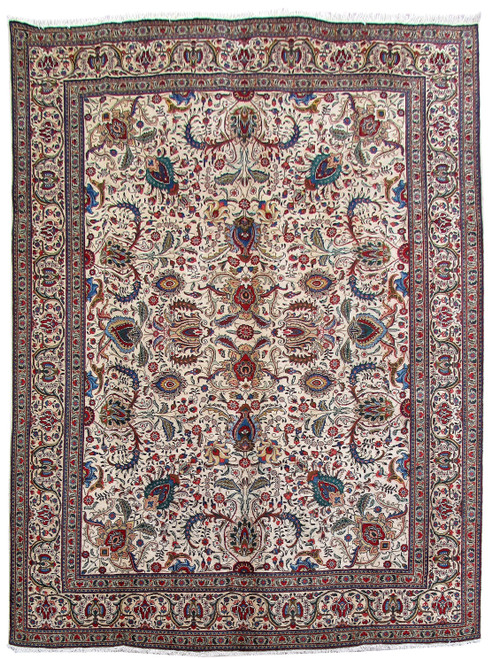
Brown Rugs
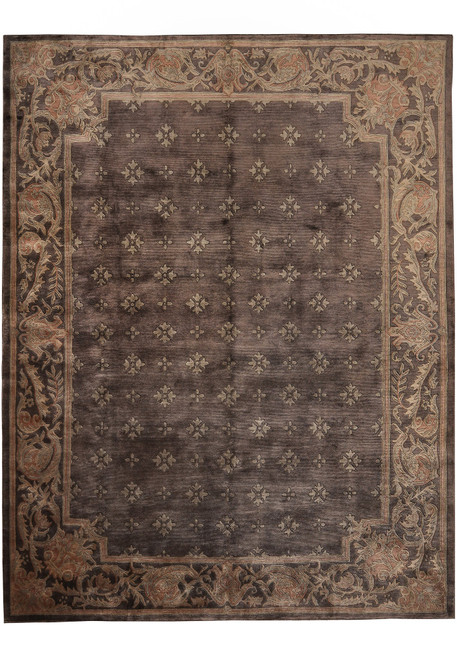
Brown arrives in a rug two ways: dyed with walnut husk or oak gall, or taken straight from a brown sheep. The second is commoner than buyers expect. The first has a consequence worth knowing before looking at any old rug, because the iron used to fix a dark brown slowly eats the wool it is fixing, and the trade treats the result as a mark of age rather than a defect.
Husk, gall and iron
Walnut husk gives warm mid-brown and needs almost no mordant. Oak gall and other tannins give the cooler browns and, with iron added, the near-blacks. The iron is the problem. Iron-tannin dyes are mildly acidic and they keep working on the fibre for decades, so in a rug of any age the brown and black knots are shorter than the knots around them. The trade calls this corrosion. Run a hand across an old Afghan or Herati rug and the dark outlines are a groove, which gives the drawing a relief the weaver never planned. A dealer reads a slightly sunken brown outline as evidence of natural dye and real age.
The browns nobody dyed
Dark fleece sorted out before spinning gives everything from camel to near-black without a dyebath, and the tribal and village traditions used it constantly. Gabbeh weaving, much tribal work and the natural-dye revival rugs sold as Chobi all lean on undyed brown. Undyed brown does not corrode, does not fade, and does not bleed, so those browns are usually the soundest part of a hundred-year-old rug. It also cannot be matched between lots, in the same way undyed ivory cannot.
What brown is good for
It hides traffic better than anything else on the floor. A brown or brown-ground rug in a hallway, a study or a room with a dog will look presentable for years longer than a pale one, which is the honest argument for it. The softer commercial browns of Ziegler weaving do the same job in a lighter room, at the cost of some of the depth.
What it needs around it
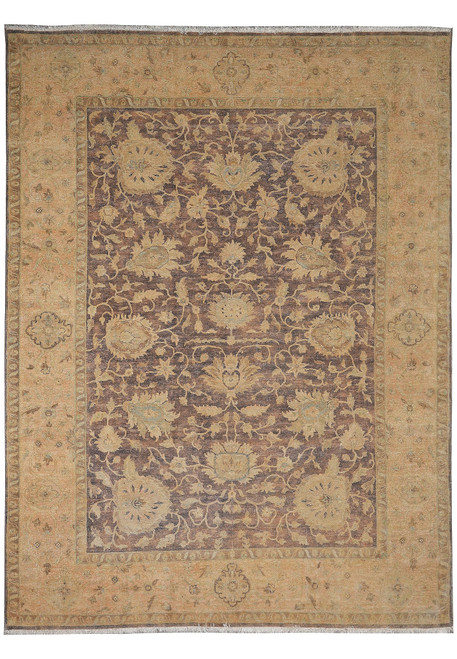
Against warm white walls brown is quiet. Against cool grey it goes flat and dull, and a little rust in the drawing is usually what rescues it. Most surviving brown-ground rugs are older pieces, since the taste is not a modern one, so the choice is narrower than for red or blue. For the cooler, darker end of the same idea, see black and grey.
-

-

-
-
-
-

-

-
-

-

9'8" x 12'11" Kerman-Style Rug | Navy Blue Floral Medallion | Hand-Knotted Wool | Distressed Finish
Was: $3,700.00Now: $3,599.00 -

9'10" x 12'7" Persian Bakhtiar Rug | Khesti Garden Panel Design | Semi Antique Sage Green Wool
Was: $6,150.00Now: $5,800.00 -