Oriental Rugs
Turkey and the Caucasus
Turkish weaving uses a symmetric knot and tends toward the geometric even when the design is floral, and the Oushak is its best known export. Caucasian rugs push that further: bold, flat, angular fields built from medallions that read like heraldry, of which the Kazak is the type piece. If you want a rug that looks drawn rather than painted, start here.
India and Pakistan
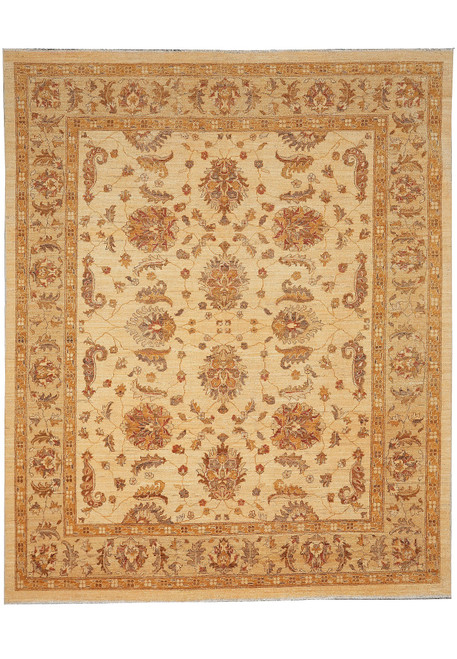
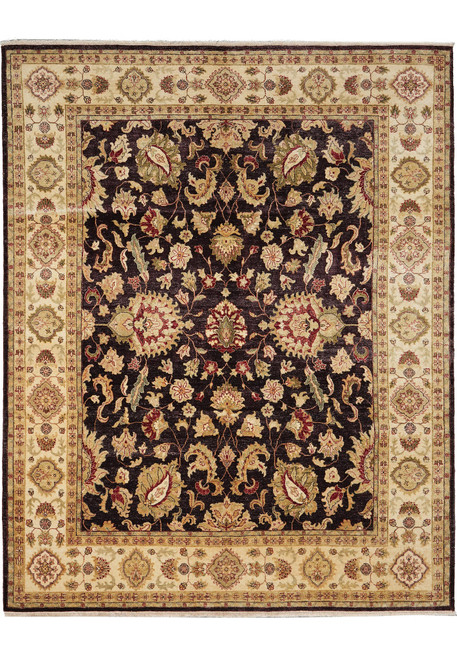
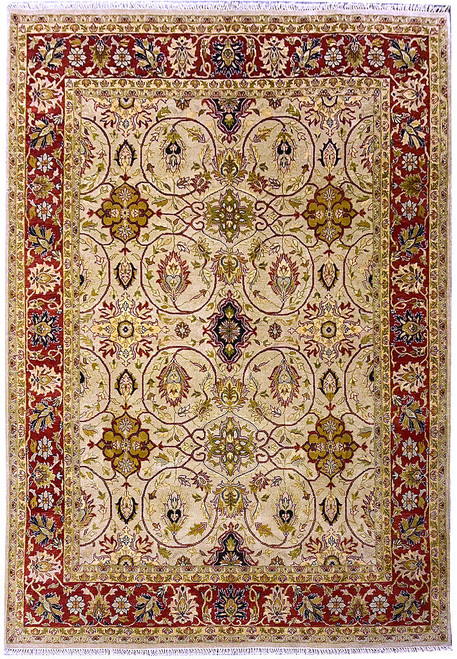
These are the workshop traditions of the last century, and they are where most classical designs are woven today. Indian weaving is enormously varied and reproduces Persian and Turkish patterns at every level of fineness. Pakistani workshops are known for the Bokhara, with its repeating guls, and for the vegetable-dyed Chobi and Ziegler revivals.
Afghanistan, China, Tibet and Nepal
Afghan weaving is wool on wool, dark red and blue, and built to be used. Chinese rugs are the outlier in this catalogue: open fields, a sculpted pile, and a symbolic rather than floral vocabulary. Tibetan and Nepalese rugs are knotted around a rod rather than tied, which gives them their particular springy handle.
Europe
European work here means the French flat-woven tradition, above all the Aubusson, which has no pile at all and reads as a tapestry laid on the floor. It is the one origin on this list where the rug is not knotted.
What origin does not tell you
It does not tell you the quality. Every origin here has a coarse end and a fine end, and a well-made rug from a modest tradition will outlast a badly made one from a famous city. Knot count, wool and condition decide that, and those are read on the rug, not on the label. If you are choosing between two pieces, compare the materials and the age before you compare the names.