Watch the film
| Size in ft: | Width: 4'1" x Length: 5'2" |
| Size in Inch: | Width: 49" x Length: 62" |
| Size in meters: | Length: 1.57 x Width: 1.24 m |
| Colors: | Rust, Terracotta, Navy Blue, Ivory, Gold, Sage Green, Camel |
| Shape: | Rectangular |
| Woven: | 100% Hand-knotted | Handmade |
| Foundation: | Cotton |
| Pile: | Wool | Low 1/4" pile |
| Age: | 1900's | Antique |
| Design: | Tabriz | Haj Jalili style medallion | Floral spandrels | Multiple guard borders |
| Origin: | Persian Tabriz | Made in Persia |
| Condition: | Excellent | Evenly low antique pile |
4'1" x 5'2" Antique Persian Tabriz Rug | Haj Jalili Style Medallion | Circa 1900s | Rust and Navy
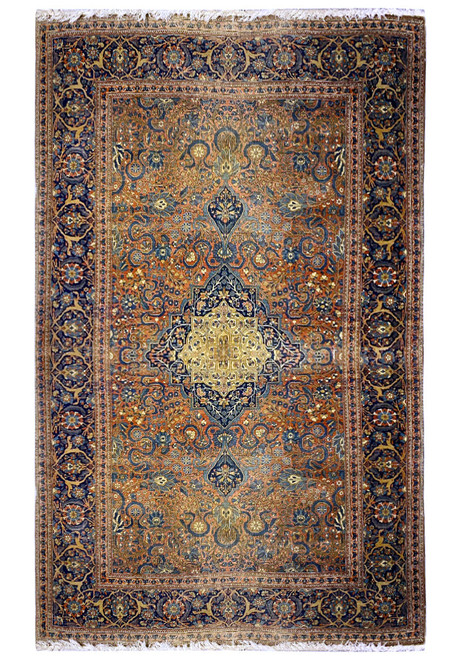
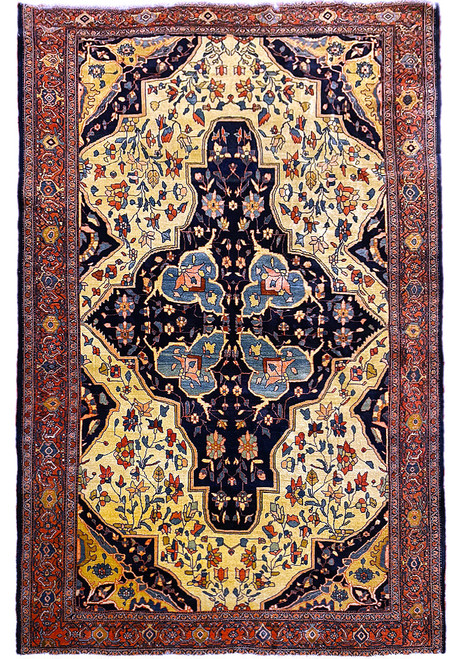
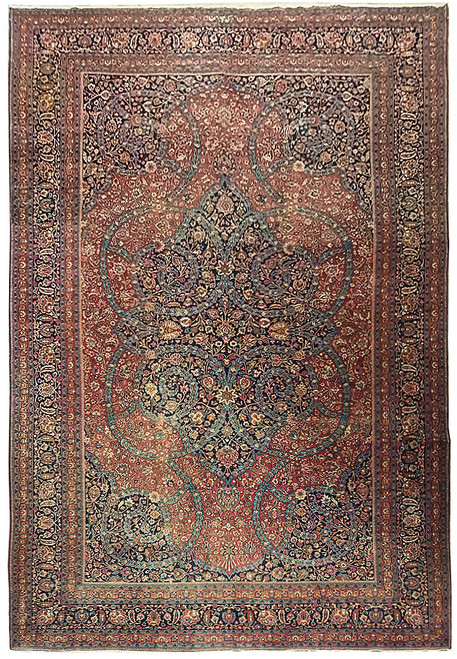
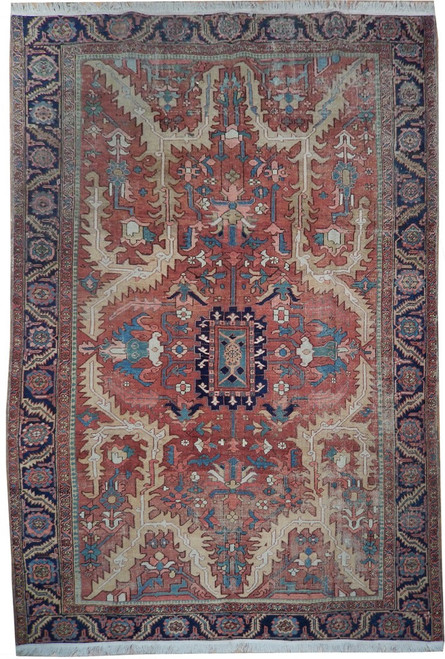
This is a small antique piece with the drawing of a serious workshop behind it. Woven in northwest Persia in the 1900's, the 4'1" x 5'2" format carries a full classical composition: a star medallion with pendants, quartered floral spandrels, a navy main border and no fewer than 4 narrow guard stripes, all held in scale without a single element feeling crowded. The pile has worn down to a low, even 1/4", which is exactly what you want to see on a rug of this age, because it puts every knot and every drawn line on display, as the close photographs show. The wool has that slightly waxy antique sheen that only comes with a century of use and good fleece to begin with. Rugs.net ships it with a certificate of authenticity, and if you want to understand what the wear pattern, the dyes and the handle tell you, our guide on how to date an antique Oriental rug walks through the same signals we used here.
Design and Motifs
The center holds a 10 point star medallion on a pale camel ground, with an 8 petal rosette at its heart ringed by tiny curling leaf sprays. Around it runs a navy cartouche filled with vine and blossom, and outside that a wide rust medallion frame scattered with serrated leaves and open flower heads. Slender pendants close the medallion top and bottom, each one a small teardrop of navy holding its own rosette. The corners are drawn as quartered spandrels in deep indigo, densely packed with vinery and palmettes that mirror the medallion field rather than repeat it exactly. The main border is a navy turtle palmette and rosette meander, flanked by ivory and gold guard stripes with a running flower head motif and, at the outermost edge, a fine reciprocal band. Look at the corners in the close photographs and you can see the weaver resolved the border turn cleanly on all 4 corners, which is the quickest test of whether a cartoon was properly drawn before the loom was strung.
A Rust Field Cooled by Indigo and Ivory
The field reads as a soft terracotta rust, lighter and dustier than a modern red, with gentle abrash moving from salmon to a deeper brick in places where the madder took differently across the dye lot. Against it the navy is almost black at the medallion outline and warms to a clear indigo in the border ground. The drawing is carried in ivory, chalk white and a pale camel gold, with sage green and olive leaves supplying the only cool note in the field, and small flashes of pure orange lighting the guard stripes. The pale camel medallion center is the lightest value in the rug and pulls the eye straight to the rosette. Because the pile is low, the colors sit flat and matte in daylight and gather a quiet sheen under lamplight, the way old vegetal dyes do. Nothing here is loud; it is a muted antique palette that settles next to walnut, brass and unbleached linen instead of competing with them.
Tabriz Weaving and the Haj Jalili Manner
Tabriz sits in the far northwest of Persia and has been the country's most disciplined workshop city for centuries, working from drawn cartoons on cotton foundations and measuring fineness by the Raj system. The most collected name from the turn of the last century is Haj Jalili, whose looms turned out small, tightly drawn medallion pieces in exactly this restrained rust, camel and indigo palette, and this rug is woven in that manner. The folded corner photograph shows the evidence: a tight, regular back, small knots, and straight selvages with no slack or drift in the weave. Pieces like this were never floor fillers, they were made to be looked at closely, and at 4'1" x 5'2" it works as a study or bedside piece, hung on a wall, or layered over a larger neutral floor covering. Browse more antique Persian Tabriz rugs or the wider selection of small Persian rugs if you are matching a tight space.
4'1" x 5'2" Antique Persian Tabriz Rug | Haj Jalili Style Medallion | Circa 1900s | Rust and Navy
Ask about this rug
This piece is the only one of it, so the things worth knowing about it are particular to it. If you want to talk through the size, the colour in your own light, or the weave, speak to someone here first.