Watch the film
| Size in ft: | Width: 6'11" x Length: 10'5" |
| Size in Inch: | Width: 83" x Length: 125" |
| Size in meters: | Length: 3.18 x Width: 2.11 m |
| Colors: | Maroon |
| Shape: | Rectangular |
| Woven: | Hand-Knotted |
| Origin: | Persia |
| Design: | Kashan |
| Condition: | Excellent |
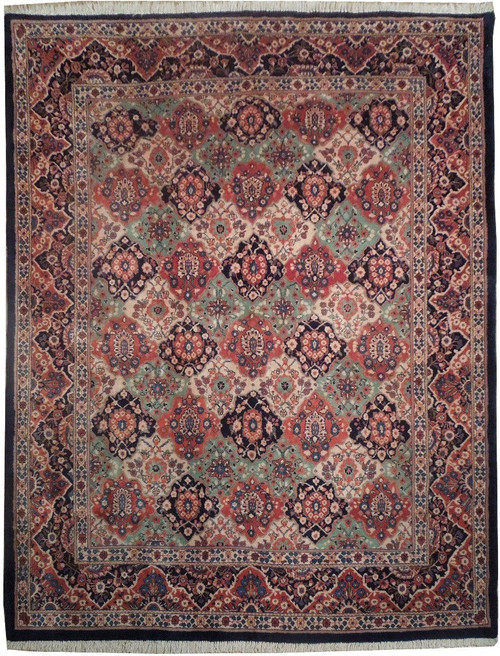
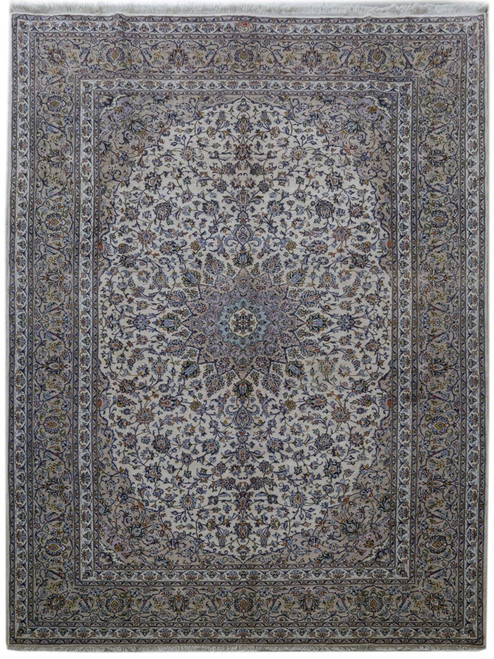
6'11" x 10'5" Persian Kashan Rug | Antique Striped Boteh Panel Design | Maroon and Ivory Wool
Most of the Persian Kashan rugs that reach the American market carry a lobed medallion on a red field. This 6'11" x 10'5" antique does something rarer: the field is divided into more than a dozen narrow vertical bands, each one packed with a marching row of boteh paisleys, so the whole surface reads like a length of printed Kashan cloth translated into knotted wool. The pile is low, even and slightly waxy to the hand, the way old wool goes when it has been walked on and then stored properly rather than scrubbed. Hand-knotted on a cotton foundation with a wool pile, it sits comfortably in the practical 7 x 10 Persian rug range, and it ships from our Freeport warehouse with a certificate of authenticity naming origin, materials and measurements.
Please Note About the Photographs:
The dark diagonal bands and soft creases across the full-view photographs are shadows and fold marks from pallet storage. They are not wear, not fade and not damage. They relax out once the rug is laid flat, and every rug is professionally steamed and pressed before it leaves our warehouse. The close-up images show the true color and the true condition of the pile.
Design and Motifs
There is no medallion and no open ground here. Instead the weaver ran continuous vertical stripes from one end of the field to the other, alternating ivory grounds with maroon and terracotta grounds, and filled every stripe with boteh paisleys that curl back on themselves in a single unbroken line. Each paisley is outlined in navy and filled with miniature rosettes, split leaves and dotted vine, and the ivory bands are separated from the red ones by a hair-thin serrated leaf guard stripe, the kind of detail that only holds together at a high knot count. This all-over striped design is framed by a broad terracotta main border of eight petal palmettes, navy rosettes and paired blue leaves, with narrow reciprocal trefoil stripes inside and out. Look at the corners in image 4 and you can see the border drawing turn cleanly, the palmettes reoriented rather than simply cut, which is the mark of a workshop weaver working from a proper cartoon.
Maroon, Ivory and Indigo: Reading the Color
The dominant reading from across a room is maroon, a deep madder red that has mellowed toward brick and old terracotta in the stripes that took the most light. Against it, the ivory bands have oxidized to a warm cream with a faint honey cast, and a second gold, closer to saffron, runs through the guard stripes and the paisley fills. The drawing is held in place by two blues: a dark indigo for outlines and rosette centers, and a lighter sky blue that appears in the palmette hearts and reads clearly on the reverse in image 6. Sage and bottle green turn up inside the larger paisleys, with small flecks of apricot and undyed white wool scattered through the field. There is gentle abrash across the red grounds, slightly lighter in some bands than others, which is natural to hand-dyed wool and gives the surface its depth rather than a flat printed look.
Kashan Weaving and the Quality of This Piece
Kashan sits in central Persia, north of Isfahan, and its looms carry a Safavid court workshop tradition along with unusually soft, lustrous local wool. It is the most recognizable Persian weave in America: when you watch Shark Tank there is a Persian Kashan on the floor. The weaving quality here shows on the back, where the knotting is fine, tight and regular enough to hold paisleys barely two inches tall without losing their outlines, and the selvedges and ivory end fringes remain original and intact. For anyone weighing age, the patina of the wool, the softened madder reds and the naturally settled pile all point the same direction, and our guide on how to date an Oriental rug explains what to look for. This is a decorative antique that has already proved it can take traffic and still hold its drawing.
6'11" x 10'5" Persian Kashan Rug | Antique Striped Boteh Panel Design | Maroon and Ivory Wool
Ask about this rug
This piece is the only one of it, so the things worth knowing about it are particular to it. If you want to talk through the size, the colour in your own light, or the weave, speak to someone here first.