Patina and Damage
What is actually happening to the wool
Three separate processes run at once for decades, and only the first is obvious.
The fibre tips get burnished. Every footfall presses cut ends of wool against each other and against grit, and over years the tips go from rough and matt to smooth and slightly polished. Polished tips return light instead of scattering it. That is where the low sheen comes from, and it is mechanical, not chemical.
Lanolin migrates. Good pile wool from mountain flocks is scoured before spinning but never stripped bare, and the grease left in the fibre works toward the surface under pressure and warmth. It is the same thing that happens to a leather chair arm. Wool that started dry cannot do this, which is why two rugs of the same age and the same knot count can sit forty years apart in how they look.
The dyes settle. Natural colours do not fade evenly. The lightest yellows go first, the reds from madder hold longest, and the blues from indigo lose their top note and keep their depth. A field that began as separate colours ends up as a set of colours that agree with each other. Nobody chose that arrangement. Time did.
Why the fakes have never quite worked
The trade has tried to shortcut this for well over a century, and the methods are all still in use. A chemical or tea wash lays a wash of colour over the whole pile. Sun fading bleaches one plane. Shearing takes the pile down to imitate age. Acid washing softens and dulls the surface fast.
Each leaves a signature. A wash flattens everything at once, so the tone sits on top of the design rather than following where the feet went, and the back stays a different age from the front. A sheared rug still has sharp, square knot heads at the base of a short pile, because the pile was cut, not walked down. Acid strips lanolin, so the wool feels dry and papery and will not take a sheen later no matter what is done to it. And none of the treatments reproduce the one thing a century of use always produces: uneven wear that maps onto how a room was actually lived in, low under the door, high under where the sideboard stood.
Look at the back. On a genuinely old piece the knot nodes are rounded and smooth from decades of the foundation working against itself, the colours on the reverse are brighter than the face because light never reached them, and the handle is limp rather than boardy. No treatment yet devised produces that combination, which is why the low sheen of an old pile is still the most reliable thing on the rug.
Where patina stops
This is the part that gets left out, and leaving it out is how people buy a ruin. Wear is the finish. Damage is damage. The line is structural, not cosmetic, and it runs roughly here.
- Low pile is fine. Exposed foundation is not. A pile worn down so the warp and weft show through in a patch has stopped being a rug in that patch. It will spread.
- Corrosion in the dark outlines is normal, up to a point. Iron mordant used for browns and blacks slowly eats the wool it coloured, so those lines sit lower than the rest of the pile. On an old piece it gives the drawing relief and is expected. When the black has gone all the way to the foundation over large areas, it is a repair bill.
- Dry rot is fatal. A rug stored damp or kept on a wet floor loses the cotton foundation. Fold a corner back: if the foundation cracks or sounds like paper tearing, walk away, whatever the face looks like.
- Old moth damage is repairable. Live moth is not a condition, it is an emergency. Look under furniture and along the selvedges, in the dark and undisturbed places.
- Pet urine is the worst of the common problems, because it runs dye, rots the cotton foundation and cannot be smelled out of a rug reliably once it is dry.
- Bleached on one side only means a rug that lived under a window. It is honest wear but it is not symmetrical, and the difference does not reverse.
Painted rugs deserve their own line. Where the pile has gone thin, the foundation can be coloured with ink or dye to hide the pale ground. It photographs perfectly and it shows the moment the rug is wet. Rub a damp white cloth across a suspiciously even worn area.
What the market actually pays for
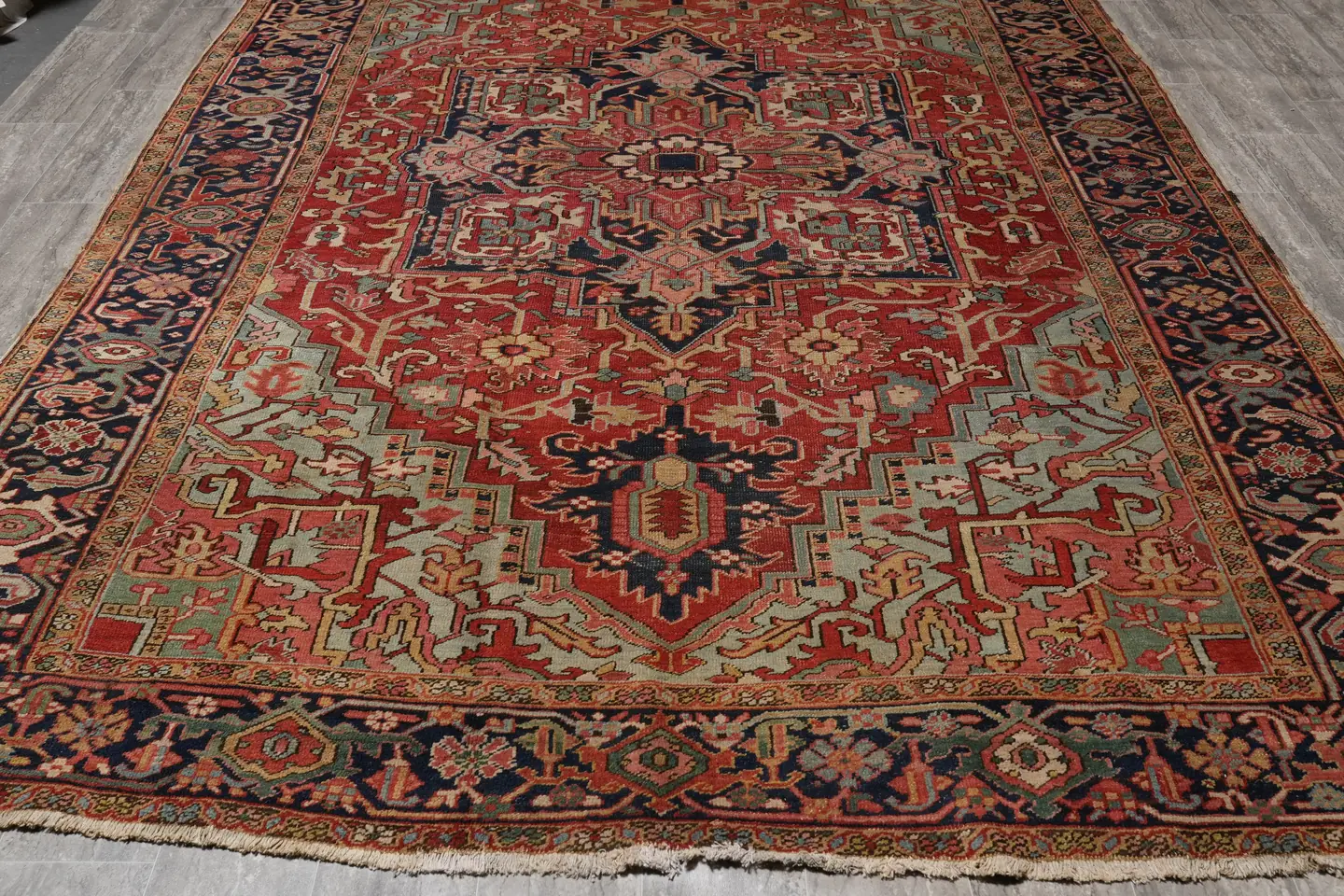
Age on its own is not value. Condition plus age plus drawing is value. A plain village piece that spent ninety years in a corridor is a ninety year old rug with a corridor's worth of wear, and that is all. The pieces that gain are the ones with drawing worth preserving and wool that responded to the use: coarse, big-scale weaving like a Heriz or a Serapi famously comes into its own low, because the design was never fine enough to lose anything and the wool was long enough to survive.
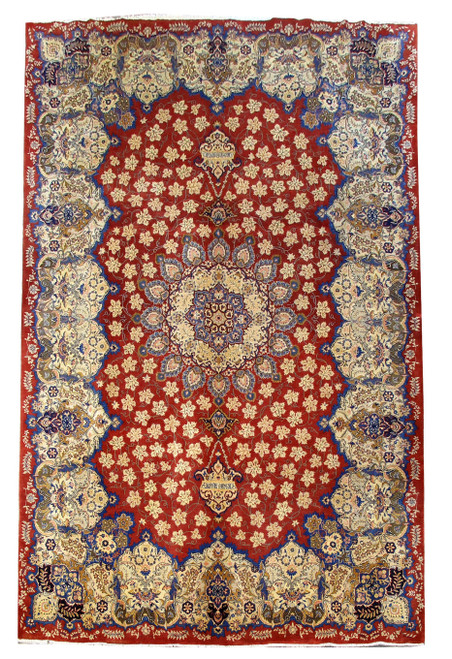
The opposite case is worth saying plainly. Very fine weaving has short pile to begin with, so there is much less material between you and the foundation. A Qom or a fine Isfahan that has been walked hard has lost drawing it cannot get back, and silk pile goes from lustrous to dull faster than wool under traffic because the fibre is smooth and takes abrasion badly. Fine pieces reward being put where people do not stride across them.
What it means if you are buying new
None of this is an argument against new weaving; it is an argument about which new weaving. What ages into patina is wool with grease left in it and colour that has somewhere to go. That points at handspun yarn and natural dyes, which is exactly the proposition of a Chobi or a Ziegler, and it points away from anything that has been washed down at the factory to look soft on arrival. A rug that is sold already mellow has spent the mellowing you were going to get.
Buying at the halfway point is the underrated option. A semi-antique piece has thirty or forty years of settling in it, has proved its dyes are stable, and still has most of its pile. A rug woven before 1970 has proved rather more than that. Either way the check is the same, and it is done with your hands: turn a corner back, look at the ends, feel whether the wool is dry, and find where the previous owner's doorway was.
Then buy the worn one, on purpose, with your eyes open. The pieces worth this attention are spread across the Persian traditions and across tribal weaving, and they are all in the same list.