Samuel Harouni
Hamburg, 1985
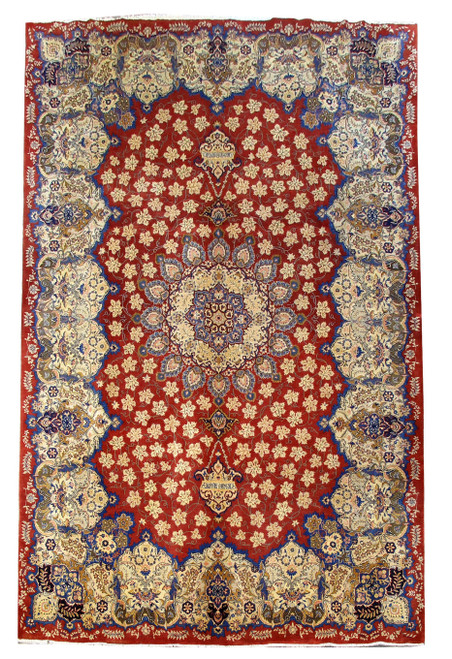
Gabriel Harouni founded Harouni Import and Export in Hamburg in 1985. The business dealt in handmade Persian and Oriental rugs, and it was built the way that trade has always been built: on relationships with master weavers across the rug-producing regions, held for long enough that the same hands could be relied on year after year. People travelled from all over the world to Hamburg to buy from him.
That is the inheritance. Not a shop, a method.
What the trade actually consists of
Most of what a rug dealer does is decline. A weaving region produces across a wide range in any given year, and the difference between the top of that range and the middle of it is not visible in a photograph and rarely visible across a room. It shows in the back, in whether the knots sit evenly; in the wool, in whether it has the lanolin left to take on a sheen after thirty years of feet; and in the drawing, in whether a curved line stays curved where it crosses a border.
A Tabriz can be a workshop piece of extraordinary precision or a competent commercial rug. The name on the label does not tell you which. Nor does the knot count on its own: a densely knotted rug in poor wool ages worse than a coarser one in good wool, and anyone who quotes you a number without showing you the pile is selling the number.
2006, and the crossing
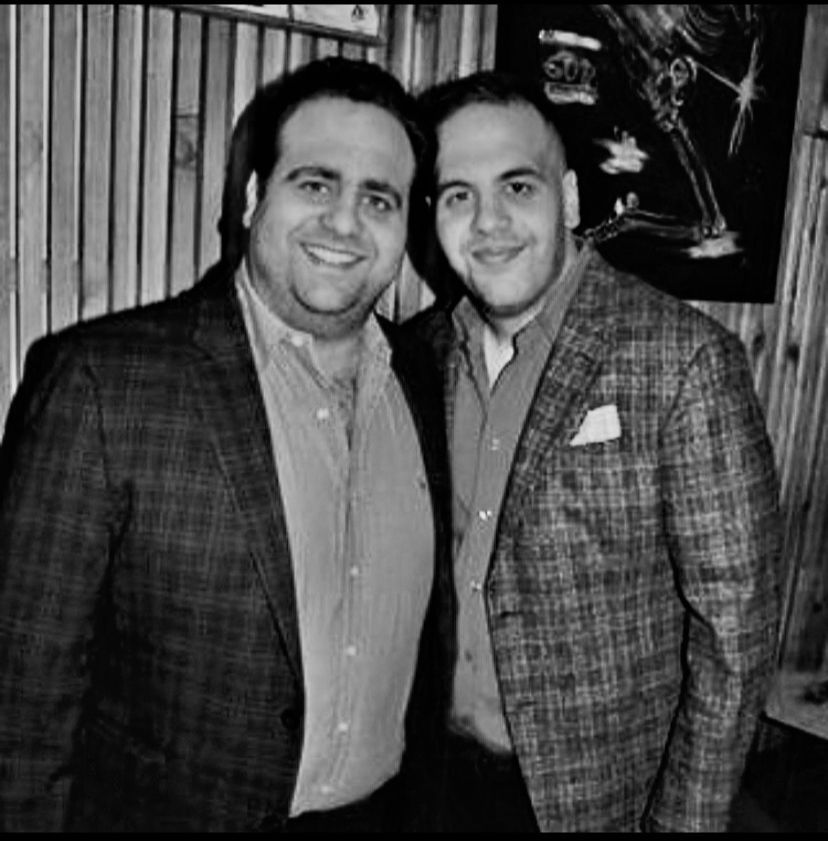
Gabriel Harouni left Germany in 2006 and settled with his family in the United States. His sons, Daniel and Samuel, carried the trade across the Atlantic and continued it after their father's death, working from Freeport, New York.
What crosses an ocean in a case like this is not stock. Stock gets sold. What crosses is the set of people you buy from and the standard you apply when you do, which takes decades to assemble and about a season to lose.
The Rugbaba
In New York City, Samuel Harouni is known as the Rugbaba. It is the kind of name a trade gives someone rather than one they choose, and it tends to be given to the person who will still be talking about a rug's foundation twenty minutes after the customer has stopped asking.
What the second generation argues
The brothers' view, stated plainly in their own words, is that rug shops today do not show the authenticity that the trade used to have. That is a complaint about display as much as about stock: the industry learned to sell rugs as decor, photographed flat under even light, filed by colour, and in the process stopped explaining what separates one from another.
The counter-argument is not a slogan, it is the object. A Qom in silk changes colour as you walk around it, because the pile lies one way and light either runs along the fibre or against it. A Bijar is so densely packed that the trade has called it the iron rug for a century, and it will take a hallway that would flatten something finer. A Gabbeh is coarse on purpose, because it was woven to be sat on by the people who made it. None of that survives being described as a floor covering in a neutral tone.
What it comes down to
Hand-knotted rugs are one of the few things left that are worth buying old. A rug woven before 1970 has already proved it survives; the wear it carries is the finish, not the damage. A semi-antique piece is far enough along to have settled and early enough to have most of its life ahead of it. That is an unusual thing to be able to say about a purchase.
Which is the whole argument for keeping a trade like this in a family rather than turning it into a catalogue. Somebody has to have seen enough Isfahans and enough Kermans to know where the middle of the range sits, and somebody has to be willing to say when a rug is only in the middle of it.
The rugs are here: the Persian weaving traditions, sorted by where they were made, or simply all of them.