| Size in ft: | Width: 12'10" x Length: 18'10" |
| Size in Inch: | Width: 154" x Length: 226" |
| Size in meters: | Length: 5.74 x Width: 3.91 m |
| Colors: | Red, Ivory, Green |
| Shape: | Rectangular |
| Woven: | 100% Hand-knotted | Handmade |
| Foundation: | Cotton |
| Pile: | |
| Age: | 1960's | Vintage |
| Design: | Open Field | Kerman Sarouk | Floral Medallion |
| Origin: | Persian Sarouk | Made in Persia |
| Condition: | Excellent | Full even pile |
12'10" x 18'10" Persian Sarouk Rug | Open Field Kerman Design | 1960s Wool, Excellent Condition
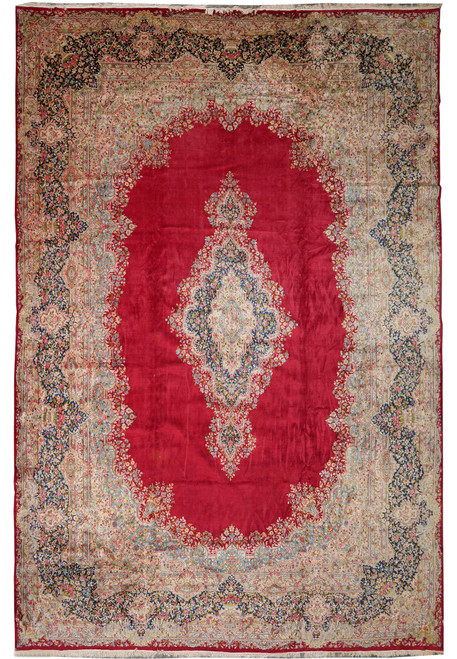
At 12'10" x 18'10" this is a genuine palace piece, one of the few sizes that can hold a 20 foot room without looking like a mat. It is a 1960s Persian Sarouk rug drawn in the open field manner: a single floral medallion, four heavy corner spandrels, and a wide expanse of clear red wool in between that most weavers would have filled with pattern. The wool is glossy, the pile is full and even end to end, and the back shown in the photographs is tight and regular with no repairs. Rugs this size are heavy freight almost everywhere else, and here they still ship free in all 50 states. Every rug leaves us with a certificate of authenticity confirming it is hand-knotted and made in Persia. Buyers shopping oversize Persian rugs rarely find an open field example in this condition.
Please Note About the Photographs:
These frames were shot in our warehouse under mixed daylight and overhead light, so the field reads deeper and more burgundy in the first image and brighter tomato red in the floor shots. The true tone sits between the two. The soft lighter streaks running across the open field are natural abrash and pile direction catching the light, not wear, fading or damage.
Design and Motifs
The center holds a lobed floral medallion built from clustered rosettes, leafy sprays and a small navy core with an ivory cartouche at each end, ringed by a loose wreath of green foliage that fades out into the bare field. The four corner spandrels are far denser: layered palmettes, cabbage rose clusters, curling ivory acanthus leaves and scrolling vine, all worked on a navy ground that anchors the corners of the room. Between medallion and spandrels the weaver left large stretches of plain red, which is exactly the effect a well drawn open field is after and the same restraint that makes Persian Kerman rugs so recognizable. The wide main border alternates navy medallion panels with ivory floral reserves, each carrying an 8 petal rosette or a rose bouquet, and is framed by narrow ivory and red guard stripes with a small repeating leaf and blossom run.
A Study in Red, Ivory and Green
The field is a deep tomato red with a faint cherry cast where the light rakes across the pile, gently varied by abrash the way naturally dyed village wool always is. Against it the medallion and its wreath are drawn in olive and moss green, a color pairing that is much harder to find than the usual red and navy formula and the reason this rug looks warm rather than heavy. Ivory does the structural work: it outlines the spandrels, carries the border reserves and lifts the whole composition away from the floor. Supporting tones are a dark indigo navy in the border grounds and spandrel fields, salmon and rose pink in the flower heads, sage and pale celadon in the leaves, and small touches of rust, gold and brown in the rosette centers. The cotton fringe and the selvage finish are clean ivory and red.
Sarouk Weaving and Quality
Sarouk weaving comes out of the villages around Arak in central Persia, a region known for lustrous long staple wool and for a heavy, tightly packed knot that gives the finished rug real body underfoot. Weavers there have always been willing to borrow drawing from the great city workshops, and this piece takes its open field and floral medallion vocabulary from the Kerman tradition while keeping the solid Sarouk handle and the thick, springy wool pile. Weaving a rug 18'10" long meant a loom wide enough for two or three weavers working side by side over a year or more, which is why the border keeps its rhythm all the way around and why the medallion sits square in the field. After 60 years the pile is still full, the colors have mellowed rather than faded, and the foundation shows no slack, all signs of a well made vintage piece that has been stored properly.
12'10" x 18'10" Persian Sarouk Rug | Open Field Kerman Design | 1960s Wool, Excellent Condition
Ask about this rug
This piece is the only one of it, so the things worth knowing about it are particular to it. If you want to talk through the size, the colour in your own light, or the weave, speak to someone here first.