Watch the film
| Size in ft: | Width: 9' x Length: 13'2" |
| Size in Inch: | Width: 108" x Length: 158" |
| Size in meters: | Length: 4.01 x Width: 2.74 m |
| Colors: | Red, White Ivory, Navy Blue accents |
| Shape: | Rectangular |
| Woven: | 100% Hand-knotted | Handmade |
| Foundation: | Cotton |
| Pile: | 3/8" | 100% Wool |
| Design: | Heriz | Stepped Geometric Medallion | Ivory Corner Spandrels |
| Origin: | Persian Heriz | Made in Persia |
| Condition: | Excellent |
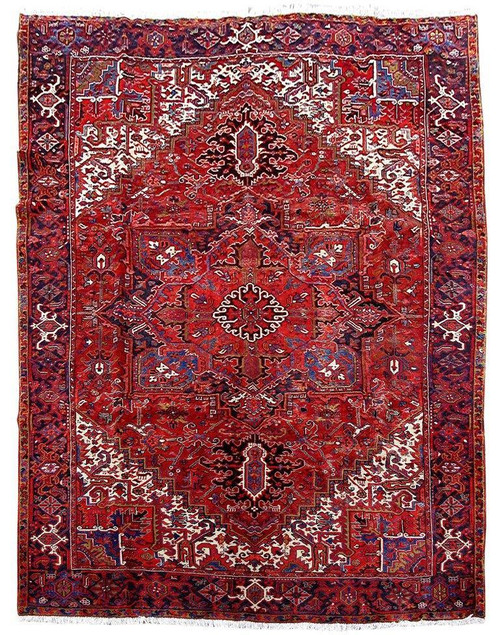
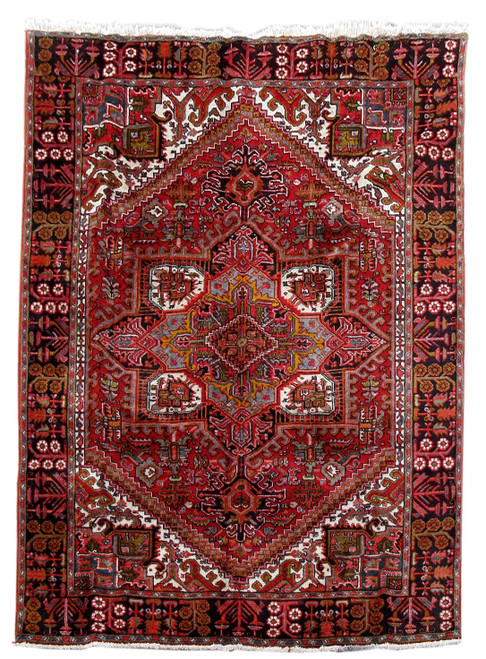
9' x 13'2" Persian Heriz Rug | Red Field, Ivory Corners | Stepped Geometric Medallion, Excellent Condition
A true room-size Heriz in the proportion buyers ask for most often and rarely find: 9' x 13'2", wide enough to sit under a full seating group and long enough to carry a dining table with the chairs pulled back. The pile is 3/8" wool on a cotton foundation, still thick and even edge to edge, with the tight low-nap surface that tells you the rug was woven with good wool and beaten down hard on the loom. Condition is excellent, with straight sides, intact selvages and no repairs visible in the photographs. Image 6 shows the reverse with a metric ruler laid across the back so you can read the knot rows and the handle of the weave for yourself. Among large Persian rugs this is the practical one: heavy, honest, and built to take traffic for another generation. Every rug we ship leaves Freeport with a certificate of authenticity stating origin, materials and measurements.
Design and Motifs
The drawing is classic Heriz: a large stepped diamond medallion centered in the field, ringed by a serrated outline and filled with an 8 petal rosette at its core, with hooked vines and small angular palmettes radiating out from it. Above and below the medallion sit toothed pendant cartouches, and each of the 4 corners carries a broad ivory spandrel drawn as a mass of angular leaves, hooks and stepped scrollwork. The open red ground between medallion and corners is filled with squared leaf forms, cypress sprigs and blocky flower heads, each one built from straight lines rather than curves, which is exactly how the village looms translate a floral cartoon into geometry. A navy main border runs octagonal rosettes and angular vine between narrow reciprocal guard stripes. If you like the squared-off, architectural look of geometric Persian rugs, this is the pattern that defined the type.
Color Palette in Detail
The field is a warm brick red that shifts between tomato and soft terracotta as the light moves across the pile, the natural result of small hand-dyed wool lots woven in sequence. Against it, the 4 corner spandrels read chalk white to cream ivory, the brightest note in the rug and the reason the layout stays legible from across a room. The medallion combines deep aubergine and inky navy with ivory outlining, a dusty rose ground in its center and small touches of slate blue and pale sky blue in the rosette and side cartouches. Scattered through the field are accents of olive and tan gold, faded salmon and charcoal, most of them in the small leaves and flower heads. The main border is a dark indigo navy, almost black in the low-light photographs, and it anchors the red so the whole rug sits calmly instead of shouting. Close-up image 5 gives the truest reading of the reds and the blue and ivory accents together.
Heriz Origin and Weaving Quality
Heriz is a district of weaving villages east of Tabriz in northwest Persia, spread out on the slopes below Mount Sabalan. Two local facts explain the reputation. The water carries a high mineral content, which sets the wool dyes hard, and the sheep on those high pastures grow a coarse, springy, high-lanolin fleece that resists crushing and cleans easily. Weavers there work on a cotton foundation from village cartoons rather than a city workshop drawing, which is why the curved line of the original floral design comes out stepped and angular, and why the rugs are woven at a modest knot count with a fuller pile. Heriz village work generally sits under 200 knots per square inch, and that is a feature, not a shortfall: the thicker knot and heavier handle are precisely what let a rug like this spend 50 years under furniture and still hold its color and structure. This 9' x 13'2" piece is a well-woven example of the type, symmetrically drawn, flat lying, and made for real floors.
9' x 13'2" Persian Heriz Rug | Red Field, Ivory Corners | Stepped Geometric Medallion, Excellent Condition
Ask about this rug
This piece is the only one of it, so the things worth knowing about it are particular to it. If you want to talk through the size, the colour in your own light, or the weave, speak to someone here first.