Watch the film
| Size in ft: | Width: 3'4" x Length: 16' |
| Size in Inch: | Width: 40" x Length: 192" |
| Size in meters: | Length: 4.88 x Width: 1.02 m |
| Colors: | Blue, Rust Red, Olive Green |
| Shape: | Runner |
| Woven: | 100% Hand-knotted | Handmade |
| Foundation: | Cotton |
| Pile: | |
| Age: | Circa 1950s | Vintage |
| Design: | Herati | Mahi Fish Pattern | All Over |
| Origin: | Persian | Made in Persia |
| Condition: | Excellent | Ready for immediate use |
3'4" x 16' Persian Herati Runner Rug | Tabriz Mahi Fish Design | Circa 1950s Wool Pile
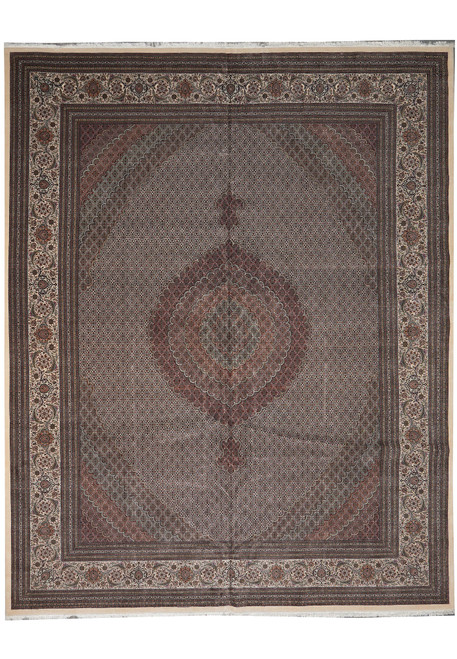
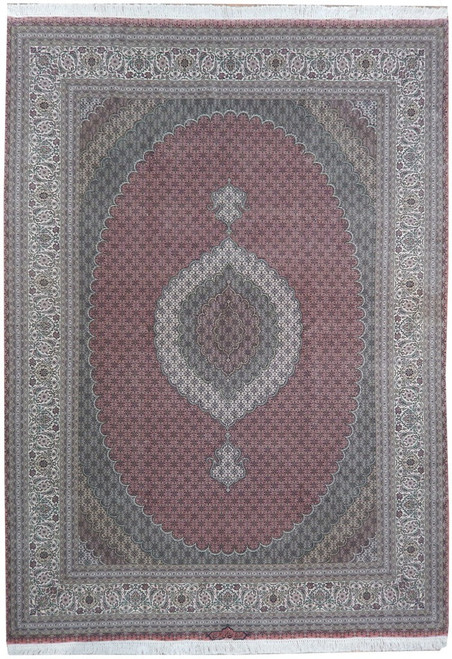
A full 16 feet of hand-knotted wool, 40" wide, drawn in the classic Herati mahi pattern and woven in Persia around the 1950s. Runners this long are not made to order any more, and finding one at 3'4" x 16' with the pile still even from end to end is the hard part. The wool has that slightly waxy, well walked-on handle that only decades of use give, the colors have mellowed into each other, and the selvedges and fringe are intact. It is the natural answer for a long corridor or a double stair landing where nothing off the shelf will reach, and it works just as well on a wall or against a long bench. Every rug we sell ships with a certificate of authenticity, and this one is ready to lay down the day it arrives. For a piece of this length a hallway runner rug is usually the deciding measurement, so check your run before ordering.
Please Note About the Photographs:
A couple of faint horizontal lines and soft shadows appear across the field in the long photographs. Those are fold marks from the rug being rolled and stored, not wear, not fading and not damage. They relax out once the runner is laid flat, and every rug is professionally steamed and pressed before it leaves our warehouse.
Design and Motifs
The field carries a true Herati, the pattern weavers call mahi, meaning fish. A continuous indigo lattice of diamonds runs the whole 16 feet, each diamond anchored by a small 8 petal rosette at its center and flanked by 4 curved, serrated leaves that lean around the flower like fish circling a pond. Between the diamonds sit larger paisley style boteh forms outlined in ivory and blue, with tiny cross flowers and star rosettes filling every remaining gap, so there is no empty ground anywhere in the field. Because the repeat is all over rather than medallion based, the runner reads evenly from either end and can be cut visually by furniture without losing its logic. The border system is a 5 stripe arrangement: a wide olive gold main band of alternating rosettes and leaf cartouches, inner and outer reciprocal guards in red and ivory, and a fine barber pole stripe separating field from border. The drawing stays disciplined over the entire length, with the lattice meeting the border cleanly at the corners.
Colors: Rust Red, Indigo Blue and Olive Green
The ground is a warm rust red, closer to brick and tomato than to burgundy, and it shifts gently along the length with natural abrash where the dye lots changed on the loom. Over it the lattice and the leaf outlines are drawn in a deep indigo blue that goes almost black in the shaded photographs and opens up to a clear mid blue in daylight. The major border is the piece's signature: a soft olive green that has oxidized toward antique gold, which throws the red field forward and keeps the whole runner from reading dark. Inside that band the rosettes pick up salmon pink, aubergine purple, pale buttercream and small dots of clean sky blue, and the same ivory and cream appear as outlines through the field, giving the pattern its sparkle. Close up you can see touches of brown and charcoal in the leaves and a faded rose in the guard stripes. The palette is mellow and fully settled, the kind of color you get only from vegetable dyes that have had 70 years to come into balance.
Persian Origin and Weaving Quality
This runner was woven in Persia in the Tabriz mahi idiom, the northwestern drawing style that made the Herati fish pattern famous and spread it through the surrounding weaving towns. The hallmarks are all here: a tight, small scale repeat held accurately across a very narrow 40" loom, a firm wool pile knotted on a cotton foundation, and a back that is flat, even and legible row by row, as the close photographs show. Weaving 16 feet of continuous lattice without the pattern drifting takes an experienced hand and a well dressed loom, which is why long runners from this period were workshop rather than casual village work. The wool is local, lustrous and springy, and it has worn down to a short, dense, even pile that will take decades more traffic. If you want to understand how pieces like this are placed in time, our guide on how to date an Oriental rug walks through the same clues we used on this one.
3'4" x 16' Persian Herati Runner Rug | Rust Red & Navy Mahi Fish Design | Tabriz, Circa 1950s
Ask about this rug
This piece is the only one of it, so the things worth knowing about it are particular to it. If you want to talk through the size, the colour in your own light, or the weave, speak to someone here first.