Persian Rugs
Persian weaving is not one tradition. It is several dozen, worked in cities, villages and tents across Iran, and the distance between them is greater than the distance between most countries. A silk workshop piece from Qom and a coarse wool rug from a Hamadan village are both entirely Persian and have almost nothing else in common.
The city workshops
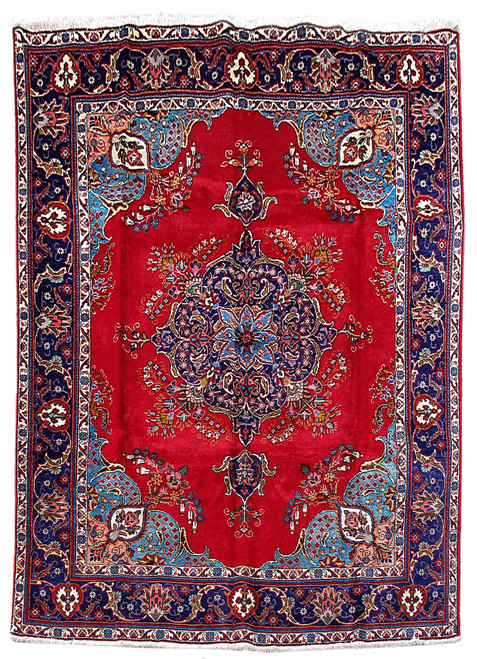
A city rug was drawn on paper first. A designer produced a cartoon, a master set it on the loom and weavers followed it knot by knot, which is what makes a curved, symmetrical, repeatable field possible. Tabriz covers the widest range of fineness of any Persian name. Kashan is the classical medallion at its most formal. Isfahan and Nain are the fine end, worked in wool outlined with silk on a silk foundation, and Qom is the youngest of the great names and the only one that never had a coarse end.
The village looms
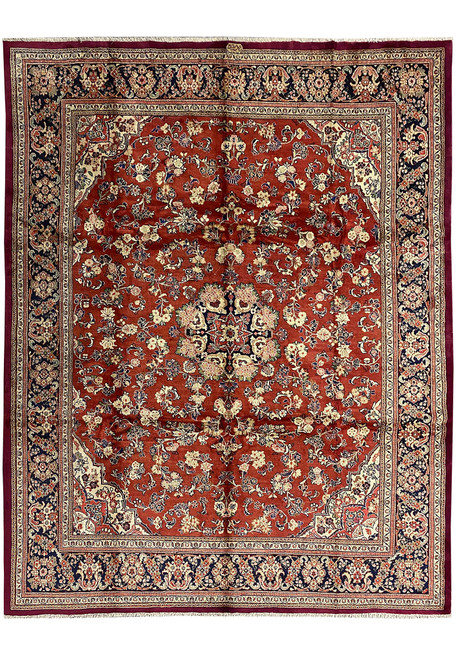
A village rug was woven from a pattern held in common rather than on paper, and it shows: the drawing is squarer, the palette shorter, the structure heavier. Heriz is the type piece, a large angular medallion on a rust field, built on a thick foundation that makes it one of the most durable rugs anyone weaves. Bijar is denser still, packed so hard the trade calls it the iron rug. Hamadan is not one village but several hundred, which is why the name covers everything from a rough runner to a fine single-wefted piece.
The tribal weavers
South and west of the cities the looms were portable, the wool came from the weaver's own flock, and nothing was drawn in advance. Qashqai, Afshar and Yalameh rugs carry the marks of that: a border that runs out of room at the corner, two ends of a field that do not quite match, colour that shifts in bands as one dye lot gave out. The Gabbeh is the same tradition reduced to colour and a few figures.
Reading fineness
Knots per square inch is the number everyone asks for, and it means less on its own than people expect. It tells you how finely the pattern could be drawn, not how long the rug will last. A 250 KPSI Kashan and a 90 KPSI Heriz are not competing; the first was built to hold a curve and the second to take a century of feet. Tabriz quotes the same idea as raj instead, counted across a fixed width.
Wool, and why Persian wool is spoken of separately
Highland sheep in Iran grow a long, greasy fleece high in lanolin, and hand-spun yarn from it takes dye unevenly and wears to a polish rather than a fuzz. That is the reason an old Persian rug looks the way it does and a new machine-spun one does not. It is also why abrash, the horizontal banding of tone across a field, is so common here and reads as character rather than as a fault. The wool and silk pages set out what each pile is for.
Living with one
For a hall or a dining room, take a village weave in wool from the vintage band: it has already proved it can take traffic. For a bedroom or a study the question is open and a fine Isfahan or a silk Qom earns its place. Measure the floor before you choose the piece, because these rugs exist once and cannot be reordered in another size; the size bands are the place to start.