

The showroom floor
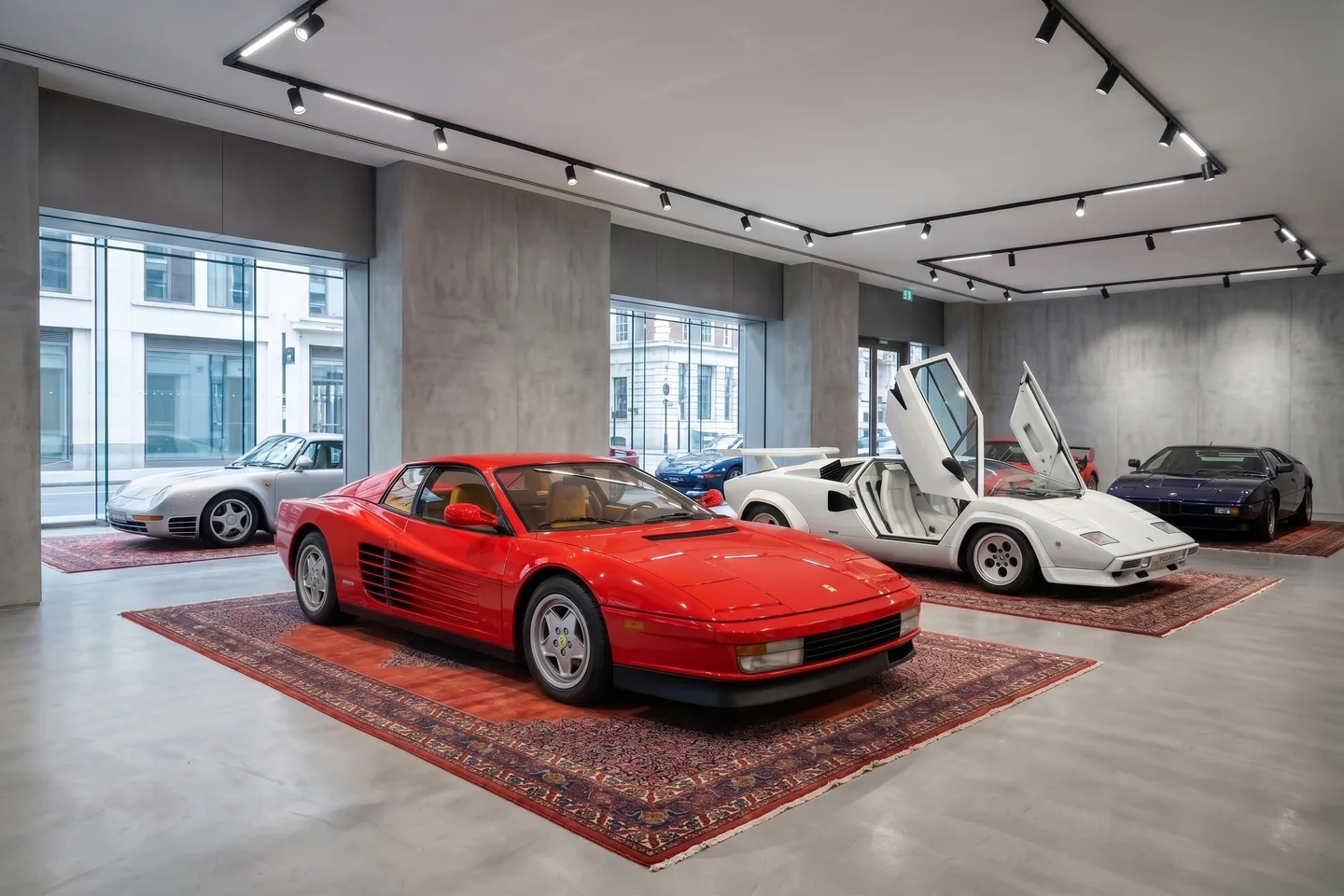
The architect had specified poured resin, wall to wall. What went down instead was a Tabriz under the Testarossa, a Heriz beneath the Countach, a Kashan for the Porsche 959, and one more for every car that has arrived since. The logic is hard to argue with. Every car on that floor was assembled by hand, in small numbers, in a decade nobody is making any more. So was every rug underneath it. Only the rugs are eighty years further into the work.
The arithmetic
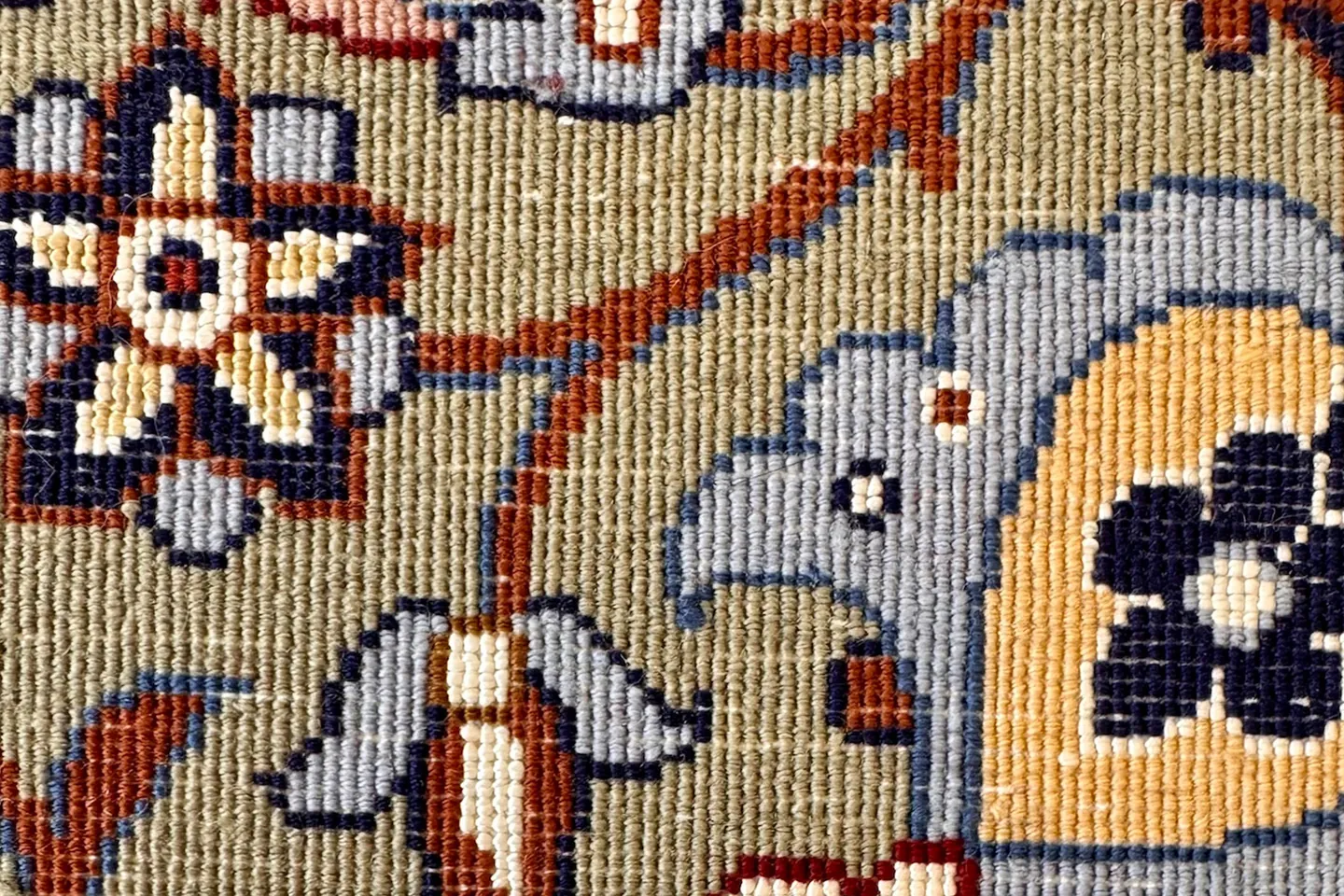
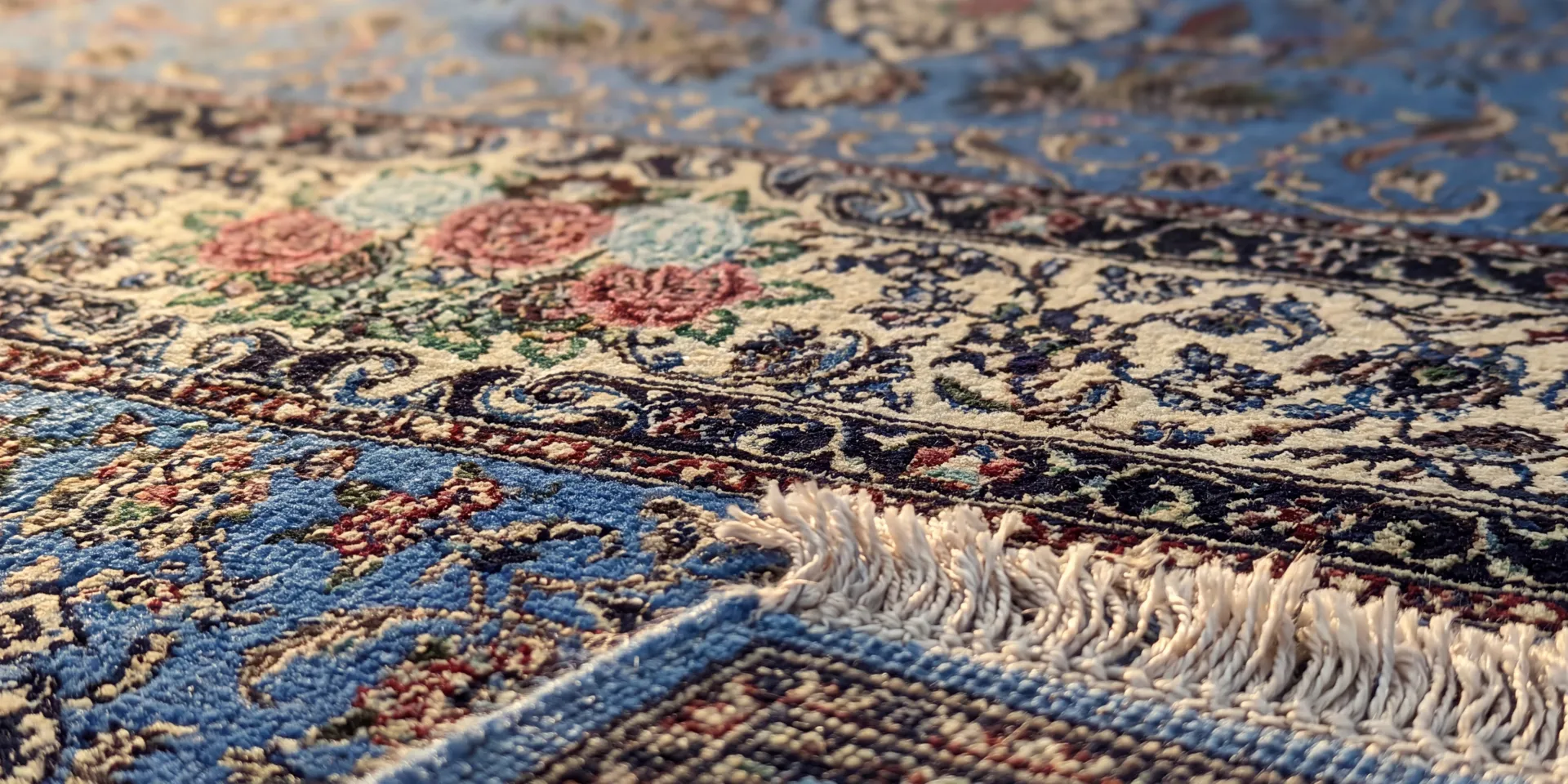
This is the back of a six by ten Isfahan at seven hundred knots to the square inch. Every one of those 6.7 million knots was tied, trimmed and beaten down by hand, and a good weaver manages somewhere near ten thousand in a day. Do that division and the price stops reading like a number and starts reading like a calendar.
At the loom
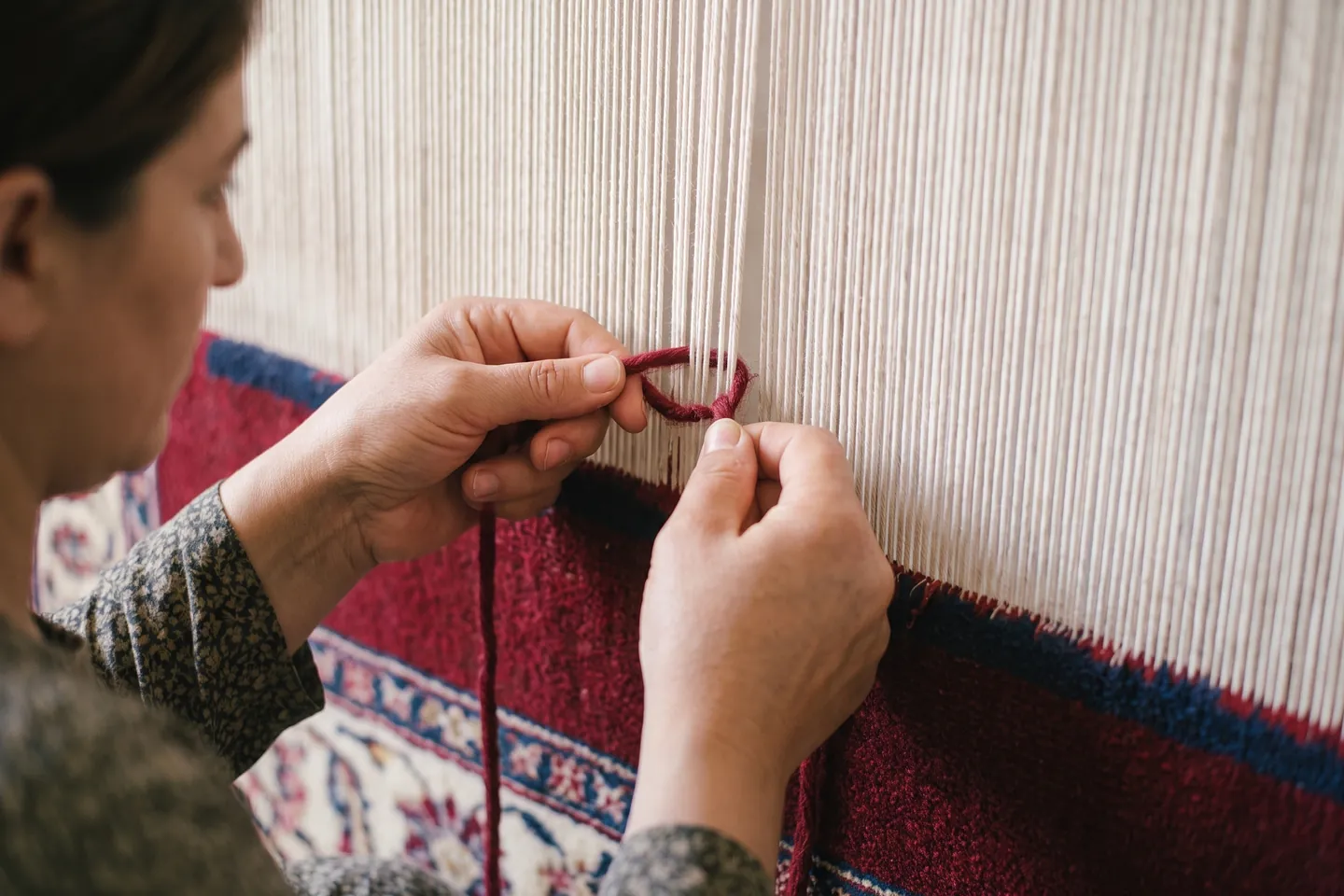
A vertical loom is strung with cotton warp and the rug grows upward from the bottom, a row at a time. The weaver loops the wool around two threads, cuts it, moves on. Every few rows the iron comb comes down and beats the knots tight. Nobody has yet found a way to speed this up that does not show in the finished rug, which is the whole reason a hand-knotted piece still costs what it costs.
Hover a region to read its tradition
Region boundaries: geoBoundaries gbOpen IRN ADM1/ADM2, derived from OpenStreetMap data, © OpenStreetMap contributors, ODbL.
Rug photographs, all freely licensed, via Wikimedia Commons, the Victoria & Albert Museum and The Metropolitan Museum of Art. Per-region credits are listed in assets/img/rug-map/CREDITS.md.
Natural dyes
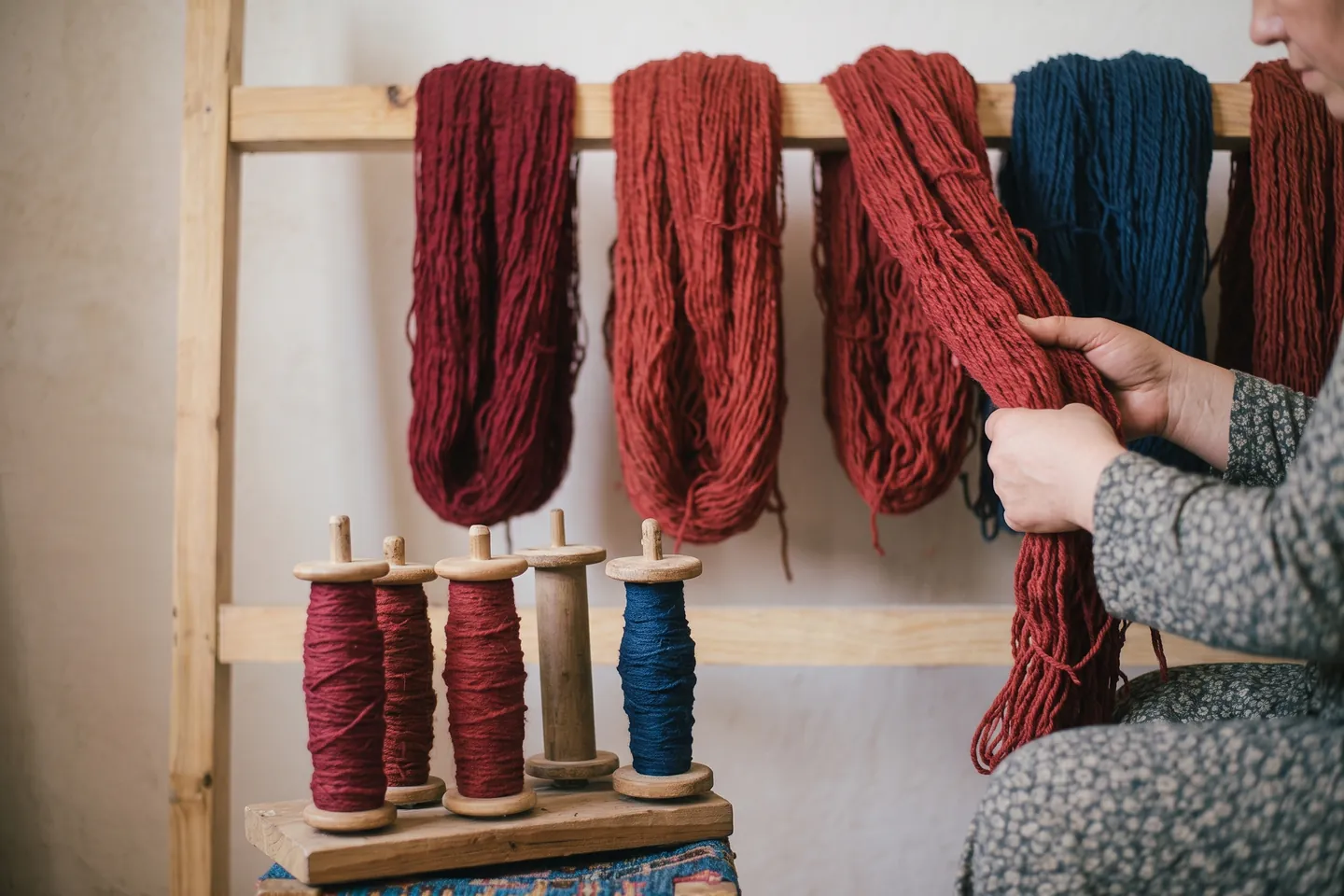
Madder root for the reds, indigo for the blues, pomegranate rind for gold, walnut husk for brown. The wool is dyed loose, in the skein, long before a single knot is tied, and no two batches come out quite the same. Look at the reds on that rack. That is why an old rug's field drifts in tone from one end to the other. The trade calls the drift abrash and treats it as proof the colour never came out of a factory.
Nap
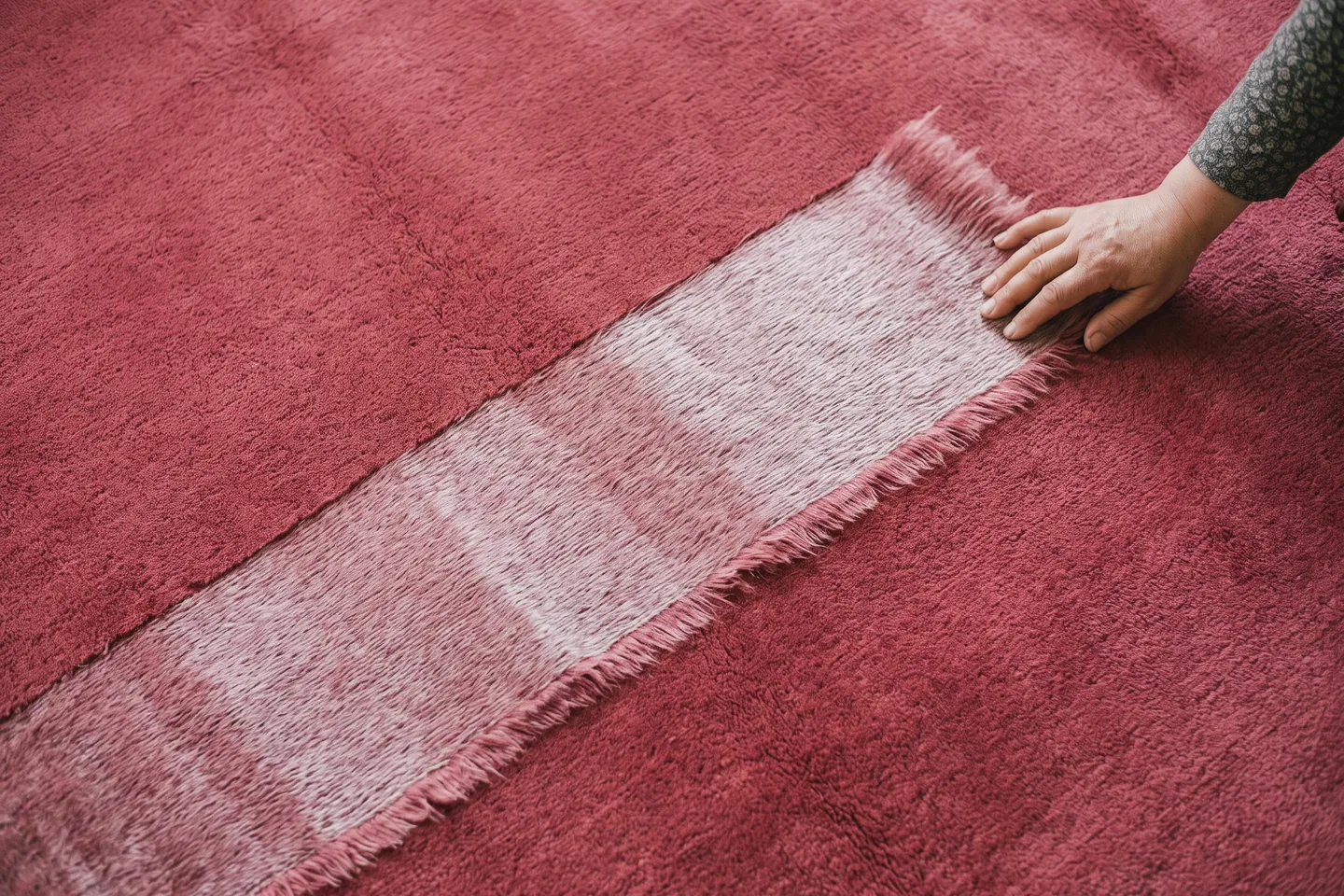
The pile lies in one direction, the way grass does. Look along it and the wool reads pale and luminous. Look into it and the same wool goes deep and velvety. One rug, one dye lot, one light. Run a hand across it and you can move the line yourself. Silk does it hardest, which is why the finest silk pieces are as often hung on a wall as laid on a floor.
Signed work
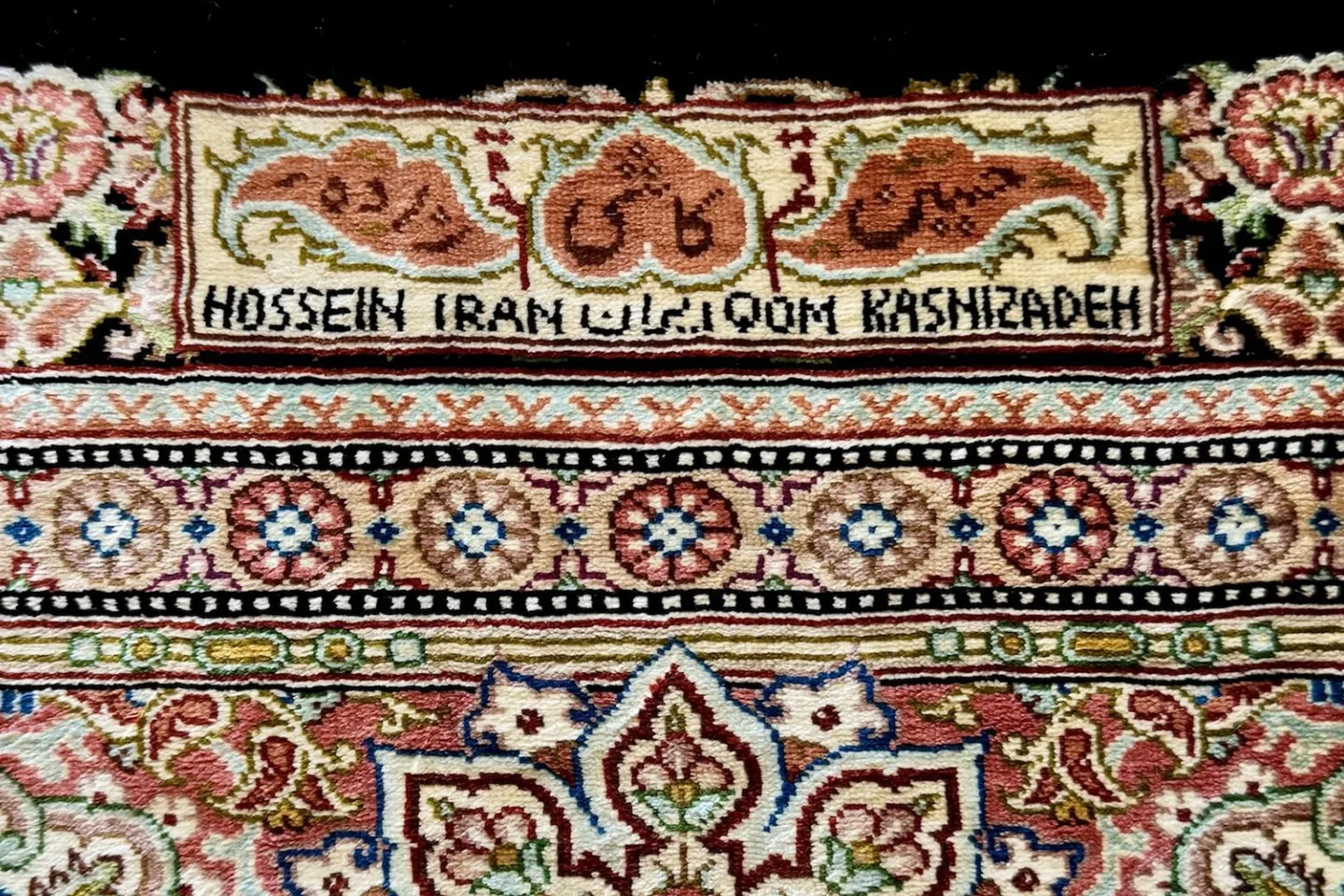
Somewhere in the border of a master piece, tied in the same silk as everything around it, sits a cartouche with a name in it. This one reads Hossein Kashizadeh, Qom, and the rug beneath it runs a thousand knots to the square inch. A workshop signs only what it is prepared to be judged by, which is why most rugs carry no signature at all. It is the nearest thing this trade has to a maker's mark, and like everything else in the rug it was tied there by hand.
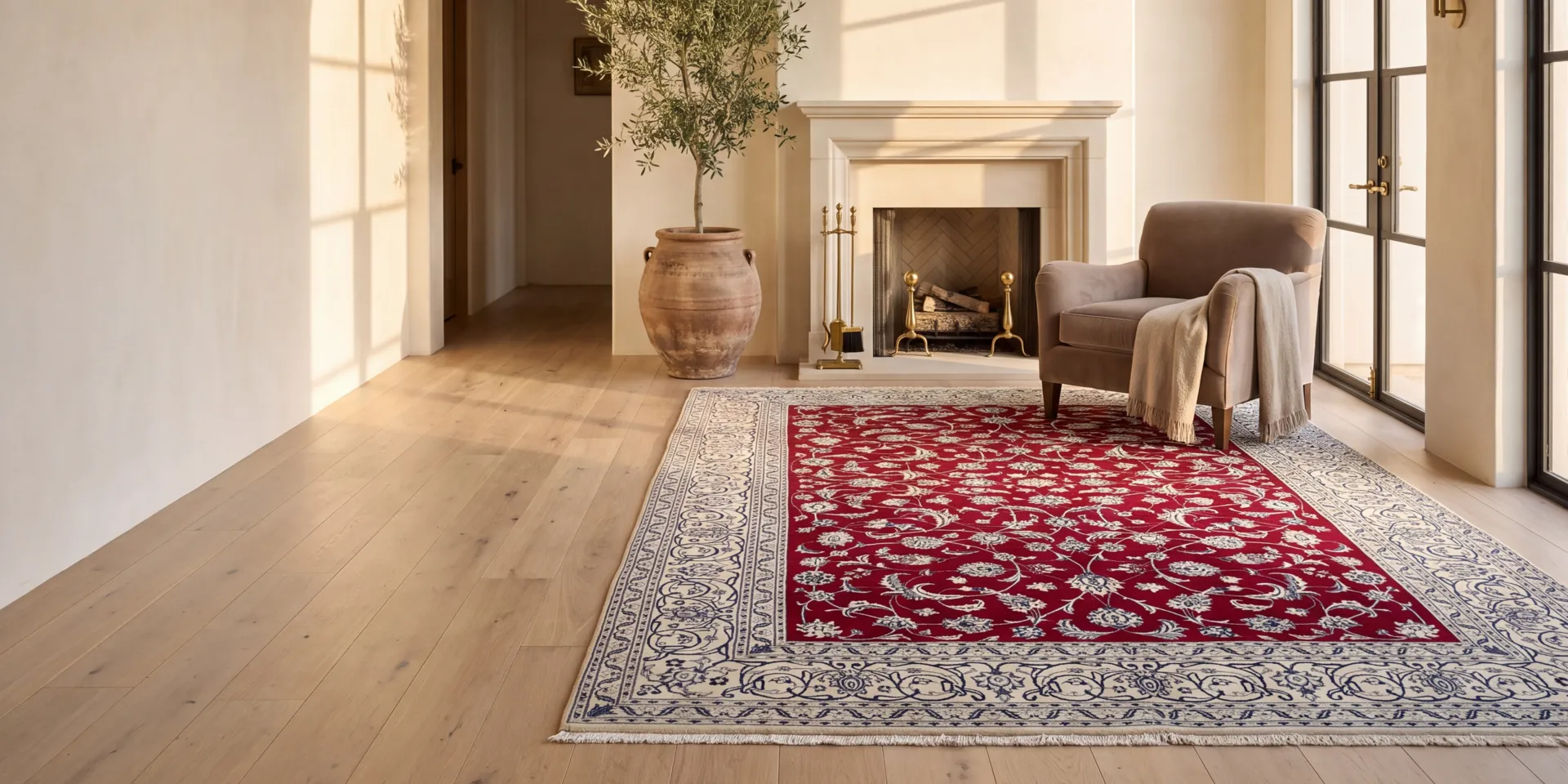
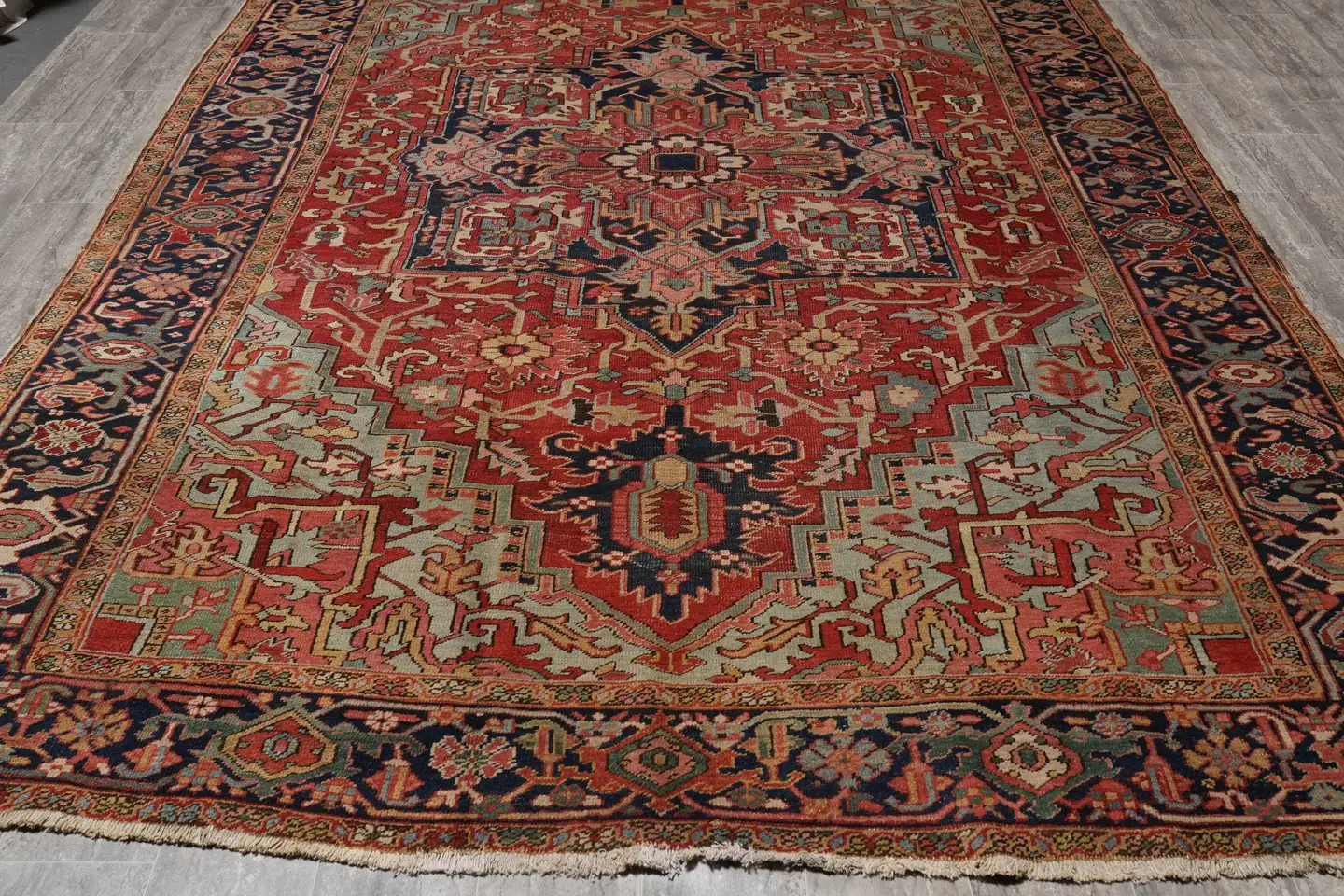
The rug is almost always too small. Measure the floor first, then look at what was woven to fit it.
Patina
New wool is bright because nothing has been asked of it yet. Walk on it for eighty years and the lanolin works its way back to the surface, the dyes settle into one another, and the pile takes on a low sheen that no finishing process has ever faked convincingly. Collectors pay more for the worn one. That is not sentiment, it is the material doing the job it was chosen for.
A hundred years from now
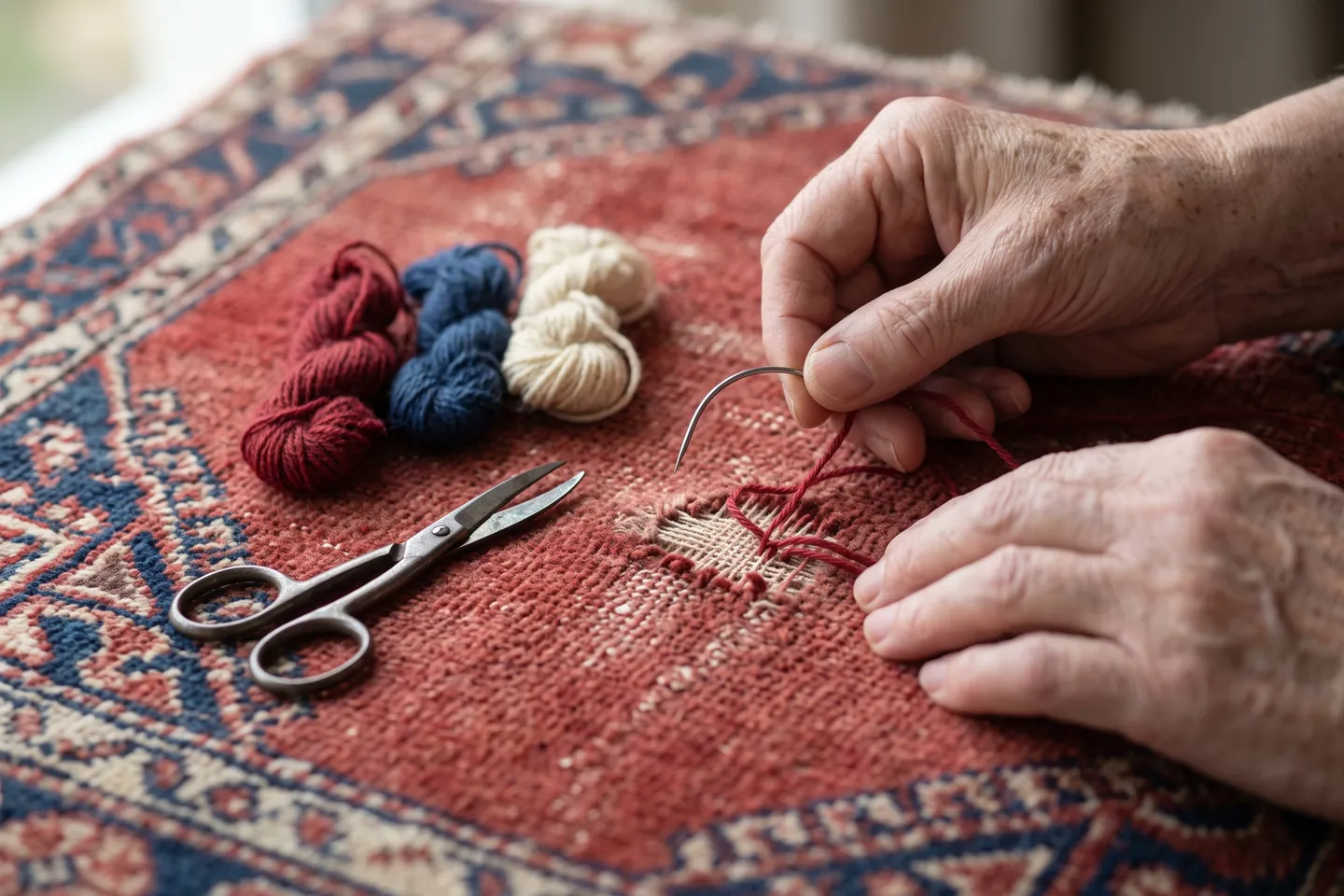
A worn patch is re-knotted into the original foundation with wool dyed to match, row by row, by hand. Done properly it disappears. That is not true of a sofa, a floor, a car or a phone, and it is the reason a rug is the only furnishing that routinely outlives the person who bought it. Buy the old one. Someone has already proved it survives.
The usual mistake
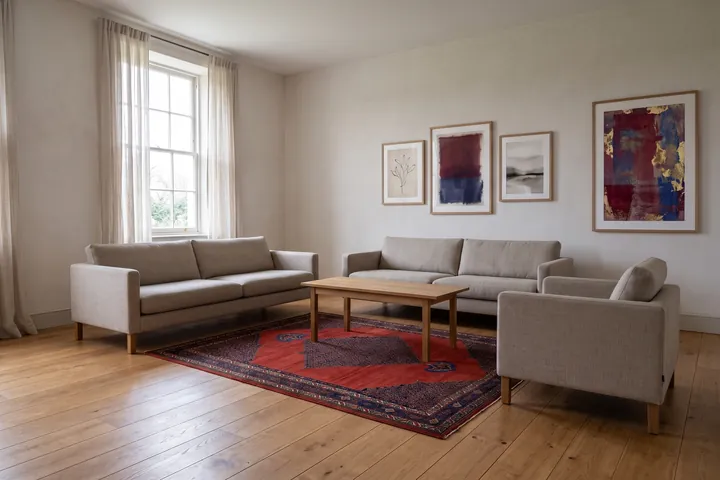
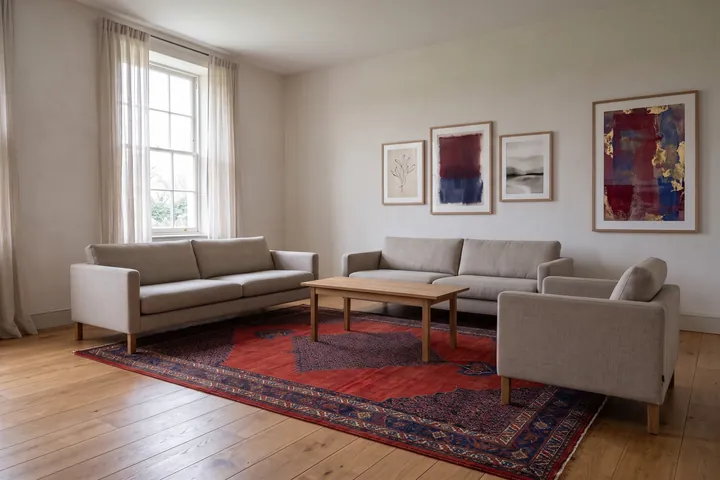
The rule is simple and almost everyone breaks it: the front legs of every seat should stand on the rug. A rug that floats in the middle of a seating group makes the room look smaller and the rug look cheaper, whatever it cost. Go up a size. It is the one decision in this business that people only ever regret in one direction.