Blue & Navy Rugs
Blue in a hand-knotted rug almost always means indigo, and indigo is the one natural dye that does not surrender. A hundred-year-old navy field is usually still navy while the reds and yellows around it have moved. That durability is the reason blue carries so much of the drawing in Persian city weaving, and the reason an old rug often reads cooler now than the day it left the loom.
Why indigo needs a vat
Indigo is not soluble in water, so it cannot simply be boiled with the wool like madder or a yellow plant. It has to be reduced in a fermenting vat until it goes yellow-green, and the colour only appears when the yarn comes out and the air oxidises it. Dipping once gives pale sky. Dipping eight or ten times builds the near-black navy of a Kashan field. In most weaving towns the indigo vat belonged to a separate specialist, which is why blue yarn was bought in and why a single rug can show several distinct blues.
Where the deep grounds come from
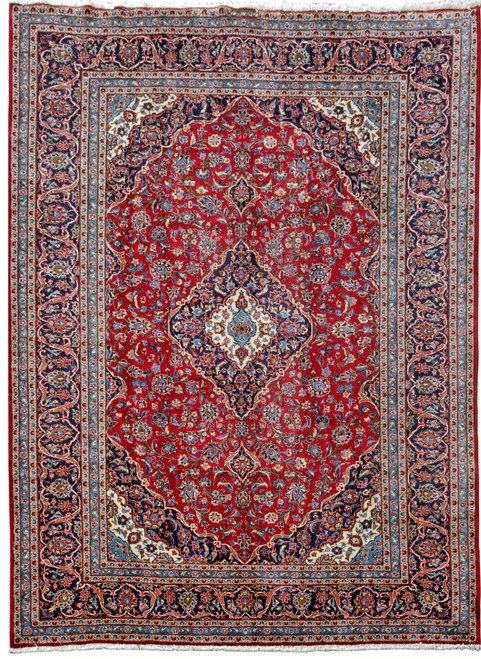
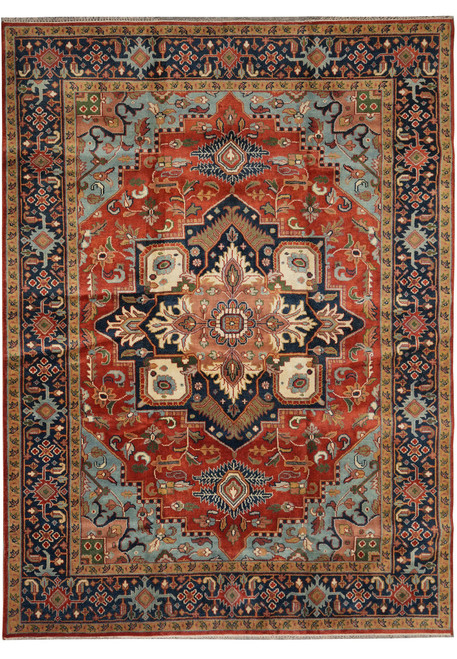
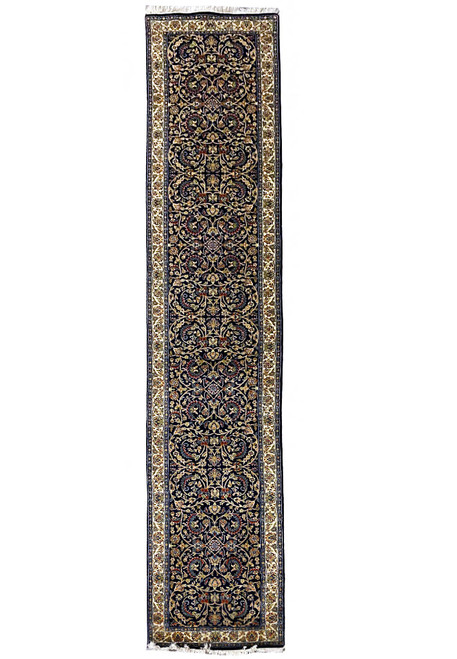
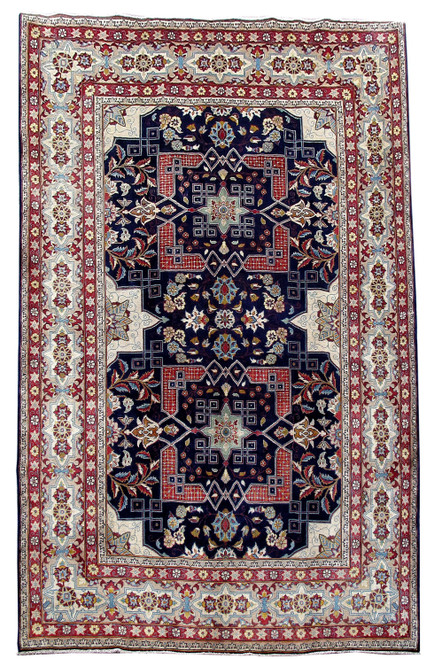
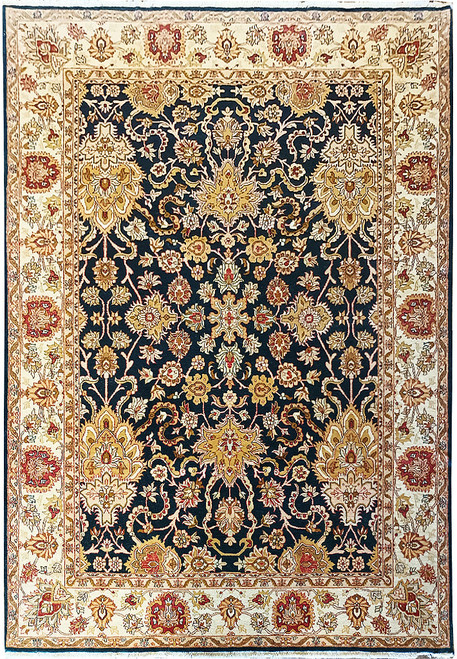
Navy fields are city work above all. Tabriz, Kashan and Isfahan use indigo grounds with ivory drawing, and Nain made a whole style out of pale blue with white. Bijar and the Caucasian weavers use blue in blocks rather than washes. At the softer end, Ziegler weaving keeps the indigo deliberately weak so the field sits close to grey-blue. Blue is also the colour that most rewards silk, because the fibre reflects and the same indigo reads three different depths as the light moves.
Abrash and the exhausting vat
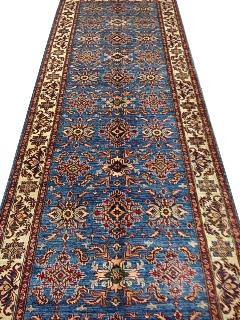
An indigo vat weakens with every batch, so the last skeins come out lighter than the first. When a weaver runs through those skeins in order, the field bands. That horizontal striping is abrash, and in blue it is more visible than in any other colour. It is normal on village and tribal work, common on older city rugs, and generally taken as proof that the yarn was dyed in small lots rather than industrially.
Living with navy
A dark blue field absorbs light and will read as black in a room lit only from the ceiling. It wants either daylight or a lamp low enough to rake across the pile. Blue also recedes, so a navy rug makes a small room look larger where a red one would close it in. Against ivory walls it is the safest ground colour in the trade, which is exactly why so much of what survives from before 1970 is blue.