Material
Material is the part of a rug you will notice every day and the part most easily got wrong. The useful question is not which material is finest, it is which one belongs where you intend to put the rug. Silk is the finest thing here and the wrong answer for a hallway, and saying so is more helpful than praising it.
Wool, which is the default for good reason
Wool is springy, greasy with lanolin, and recovers its shape after being crushed, which is exactly what a floor covering needs. It takes dye deeply and ages by softening rather than by breaking. Hand-spun wool takes dye unevenly, which is where abrash comes from: the horizontal bands of slightly different tone that run across an older field. It is a sign of hand work, not a flaw.
Silk, and where it belongs
Silk is strong in tension and weak against grit, and grit is what shoes carry. A silk pile is also much finer than wool, which is why the highest knot counts are silk: a fine grid is what lets a weaver draw a genuine curve. Put silk where it will be walked on lightly. A bedroom, a study, a formal sitting room or a wall. It is the wrong rug for a hallway or under a dining table, and for those, stay in wool.
Wool and silk together
Wool and silk mixes are the practical compromise, and the most common form is a wool field with silk used only to outline the pattern. The silk catches the light along the outlines and the wool takes the traffic. The construction is the reason a Tabriz can look like a silk rug from a distance and behave like a wool one underfoot.
Bamboo silk, said plainly
Bamboo silk is not silk. It is a regenerated cellulose fibre, the same family as viscose and rayon, made from plant pulp. It takes dye brilliantly and has a strong sheen, which is why it is used, and it is weaker than both wool and real silk when wet. Treat a bamboo silk rug as a decorative piece for a low-traffic room and it will do exactly what it was made to do.
Flat weaves
A flat weave has no pile at all: the pattern is the structure, and the rug is the same on both sides or close to it. That makes it thin, light and reversible, and it sits flat under a door that a pile rug would jam. The Aubusson is the formal end of this family and the Persian kilim the informal one.
Foundation, which you will never see
Under the pile, a rug is warp and weft, usually cotton, sometimes wool, occasionally silk. Cotton is stable and holds a rug square, which is why almost every workshop rug is built on it. A wool foundation makes a rug more flexible and slightly more prone to going out of true, which is part of why tribal pieces so often have a gentle wave to their edges.
-

-
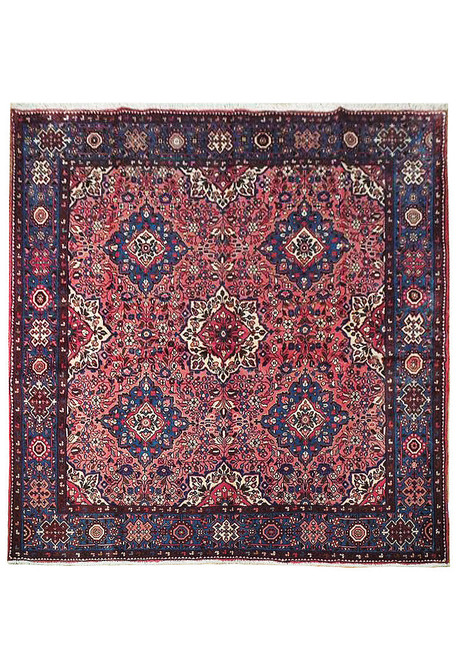
7' x 7' Persian Sarouk Rug | Ruby Red Field Floral Medallion & Scrolling Vines | Hand-Knotted Wool | Semi Antique
Was: $6,220.00Now: $5,875.00 -

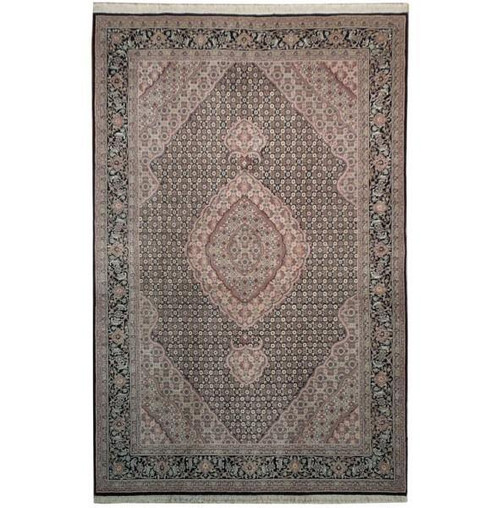
6' x 9' Wool and Silk Mahi Fish Tabriz Design Rug | Black Herati Field | Pristine Condition
Was: $4,430.00Now: $4,199.00 -

-

-

-

7'3" x 10'3" Persian Heriz Rug | Red Tribal Geometric Medallion | Hand-Knotted Wool Area Rug | Vintage 1970s
Was: $3,999.00Now: $3,599.00 -

-

-
-

-

5'9" x 8'9" Tabriz-Style Silk Rug | Ruby Red & Ivory Floral Medallion | Pristine Condition
Was: $4,880.00Now: $4,500.00