Wool & Silk Rugs
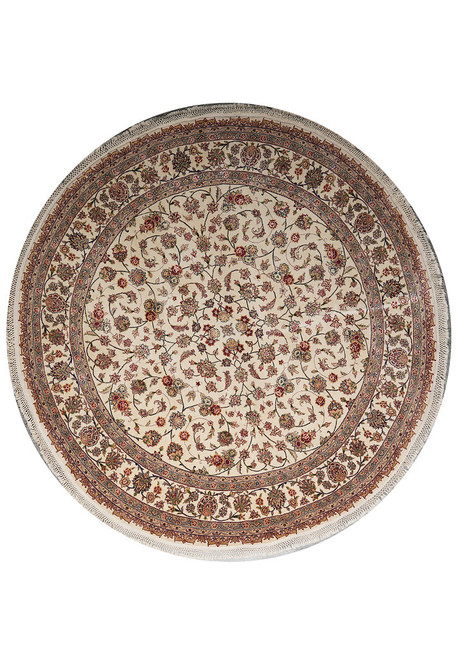
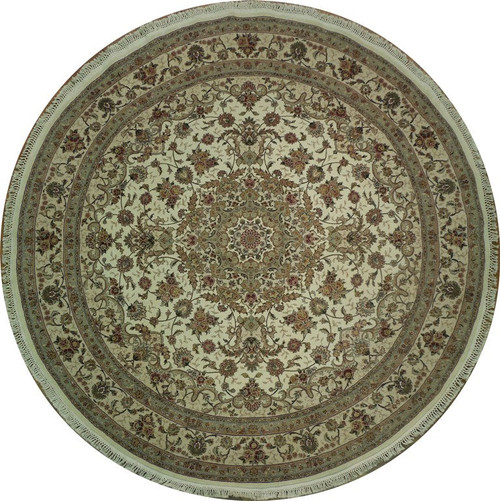
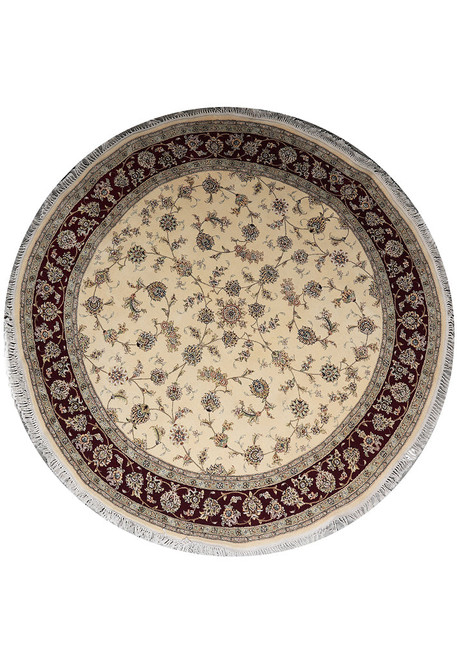
A wool and silk rug is a compromise made on purpose. The field is wool, which is what survives being walked on, and silk is used sparingly, most often as a line drawn around the pattern. The silk catches light along those lines and the rug reads far finer than its wool alone would allow. Underfoot it is still a wool rug, which is the entire point.
Silk as a pen, not as a surface
In most rugs sold as wool and silk, the silk is not there to be the pile. It is there to draw. The weaver runs it around the edge of a leaf, a cartouche, a medallion or the stem of a vine, and because silk reflects light where wool absorbs it, the outline lifts off the ground. The effect is strongest seen at a low angle, which is to say from a chair rather than from directly above. It is a drawing technique that spends a small quantity of silk and changes the whole surface.
The cities that work this way
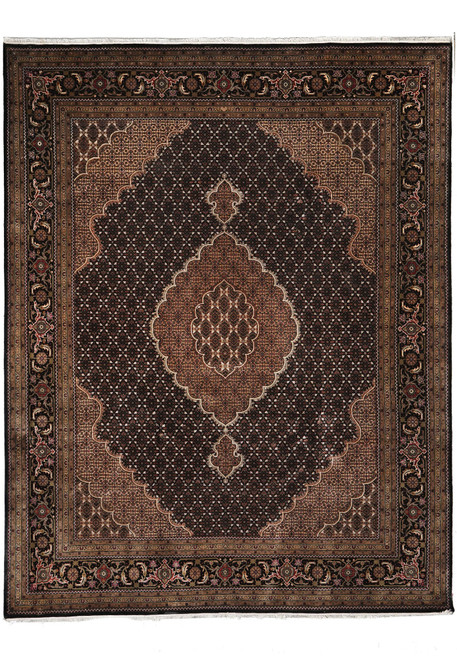
Tabriz is the name most associated with silk outlining on a wool ground, laid on a cotton foundation that keeps a large rug square. Nain does the same in a cooler palette of navy and ivory, and grades its own fineness by the number of threads twisted into each warp: the trade quotes nine la, six la and four la, and the smaller the number the finer the rug. Isfahan inverts the idea, setting fine wool on a silk foundation and adding silk highlights on top. Moud weaving in eastern Iran often carries the same highlighting across a small-scale repeat.
Two fibres wearing at different speeds
Wool and silk do not age together. Silk lies flatter and keeps its shine; wool stands up, compresses and slowly softens. In a rug used for decades the wool wears down, and the silk, which was clipped low to begin with, can end level with it or standing slightly proud, which sharpens the drawing rather than spoiling it. The other direction is the problem. Where silk has been used across an area that takes weight, it goes first, and a bald silk outline cannot be walked back into shape the way a crushed wool pile can.
Reading the proportion before anything else
The phrase covers a wide spread. At one end, a rug with silk confined to the outlines is a wool rug with highlights and can be lived with as one. At the other, a field woven mostly in silk with wool only in the border is a silk rug in disguise and needs the care silk needs. Nobody is obliged to describe it in those terms, so read the rug instead: run a hand across the field and find where the shine sits. If the shine is in the open ground rather than along the lines, treat the whole rug as silk and place it accordingly.
What the mix is not
A silk outline does not make a coarse rug fine. The knot count is set by the wool, and a mediocre weave with silk in it is a mediocre weave that glitters. Nor does the silk make the rug delicate, since the wool is still doing the work. And it is not the same thing as bamboo silk, which is regenerated cellulose and not silk at all, though it is used for the same kind of highlight and looks similar while new.
The room for it
This is the mix for a room that wants the look of a fine workshop rug and will give it ordinary use: a sitting room, a dining room in a careful household, a main bedroom. It handles six by nine to eight by ten and larger without difficulty, which pure silk rarely does, because silk is usually woven small. Tibetan and Nepalese looms apply the same principle to modern design, setting blocks of silk against blocks of wool so the contrast is textural rather than drawn. If the room is a hallway, none of this helps, and the answer is plain wool.